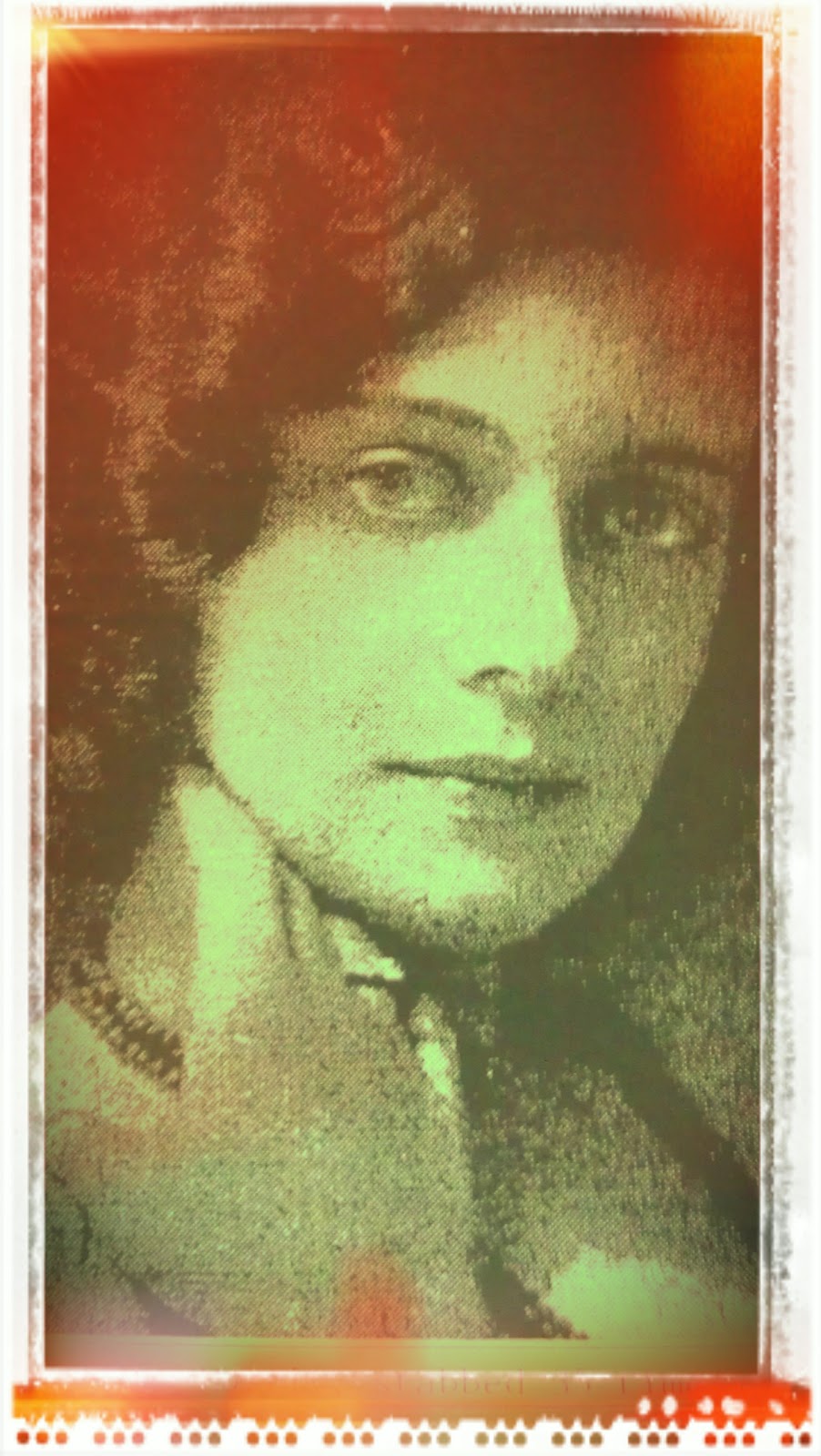
Showing posts with label Linda Agostini. Show all posts

Thursday, November 7, 2013

Local stories

We are past the halfway mark of the Pyjama Girl’s premiere season at HotHouse Theatre and I’ve had word that the Pyjama Girl is the biggest selling show at HotHouse Theatre in six years.

Yes. Six years! Obviously I am utterly delighted, so I’ll take a bow now to get it out of the way.

Because the success of the show is not about my script. 

It’s due to two things: telling a local story, and community engagement throughout the development process. 

Why local stories matter
The murder mystery of the woman found in the culvert just outside Albury is an enduring part of the local history. No town, of course, wants to be known for an awful crime, so it’s a fraught history. It’s a story often told in hushed whispers, or left out altogether.

The nine actors involved in the show, all local and all under the age of 26, had never heard about the Pyjama Girl. At just a few years older than them, I had. I thought it was important that 79 years after the crime, we ensure the pyjama girl case doesn’t pass out of living memory. 

I don’t believe the murdered young woman ever got justice or recognition of her true identity. We forget also, the anguish that must have been experienced by her family and all the other families of missing people who are denied closure on what happened to their loved one, whether in the 1930s or today.

People often ask me why the play isn’t being performed in Canberra, where I now live. The answer is: the mystery happened in Albury. 

I’m not saying it’s only a story for the Albury/Wodonga region—in fact, we’d love to tour it—but I’m saying it is a story for that region first. 

In my day job, I work in public relations. Whenever I get a brief to write something, my first question is always: who’s the audience?

We often assume that one theatre audience is like the next. This is not true. Every performance is different, which is just one of many reasons why theatre is wonderful. Every audience brings their own perspective.

Touring a show to a regional city as a test run before opening in a major capital city, for example, won’t always be indicative of the audience response in the capital city audience. Also, it can be a little insulting, because it implies that the regional area doesn’t have its own stories. 

At the end of the day, the play is for the audience. That’s how we sell tickets and sustain theatre companies.

(In this case of course, the play is also about the actors, all young and emerging, who gained experience working with a writer through the workshopping process. But this ultimately is about them developing the skills to perform—on stage, to an audience, so you see, we are back at that argument again.)
As you can tell, they're a delight to work with.
This is especially the case when it’s a story the audience grew up with. Many people in the local region have a connection to the pyjama girl case, which makes them likely to come and see a play about the story.

The play has generated a huge amount of excitement for that very reason. 

The value of community engagement 
This is where community engagement came in. I was very aware when I began the project that many locals have a sense of ownership of the story. It wasn’t for me to take that story away and speak on their behalf. I wanted people to feel they had a bit of ownership in the play as well, and that meant hearing what people had to say.

I conducted innumerable interviews with local residents, historians, historical society members, and people connected in the case. 

At first, it was about research and gathering material. As the process continued, I realised that what I was doing was giving people the opportunity to tell their stories. 

So connecting with the community became an important part of the process. Jon Halpin, the Artistic Director at HotHouse Theatre also wanted to provide insight into the development process of a new work-in-progress, which worked hand-in-hand with this. 

We had public reading of an early draft of the script about a year ago. At the Q and A afterwards, a lady introduced herself as the granddaughter of one of the families accused (and later exonerated) of the crime. 

As part of the Write Around the Murray festival in September, we held another reading of the work in progress. 

I’d scripted a joke about Albury getting electricity before Wodonga (the rivalry between the twin cities is legendary). I’d been told this by an Albury based historian. A Wodonga-based historian wanted to correct the record and left envelopes with the theatre the next day, containing the news articles and legislation that proved Wodonga, in fact, had electricity first. 

I had another lady approach me because she wanted to talk to me about the depiction of Lucy Collins, the rather tragic local drunk. The audience member knew Lucy and wanted to make sure I knew Lucy had been a confirmed red wine drinker, because there was a line in the script about Lucy drinking beer.

I was stunned with the response and generosity of what people shared with me. People sent me newspaper clippings and old photographs. Historians squabbled over electricity. People made introductions to other people with stories to tell. I spent hours talking in a Sydney café with a film-maker who lent me his thesis. The author of book on the pyjama girl dug through his own boxes of archived research to find a list of names for me. Relatives of Lind Agostini emailed me personal documents. I got letters, advice, and emails. People spread the word and the community remembered the Pyjama Girl again. 

Engaging with the community gave me a wealth of material and helped establish an audience (because if you don’t know the community, you can’t know your audience).

It helped get this story onto the stage. 

And then it helped the show to smash the box office.

The success of the Pyjama Girl is also strong proof for two funding arguments.

1. Regional arts funding cannot be underestimated. 
2. The importance of investing in the development of new work.

Without HotHouse Theatre, this story wouldn’t have been told. I wrote more about this in a ranty-pants letter last year.

So thank you HotHouse (and Jon) for programming the show and for all the support, including a director with a vision in Travis Dowling, and a cast of ridiculously multi-talented actors.

(Thank you for letting me have live music on stage, magic tricks, a magician’s box, tap dancing, a puppet show, and a hard-working follow-spot!)

Programming new work can be a risk for an arts organisation. Will the writer turn in the script on time? Will it be any good? Will it sell well enough to cover costs? New work is untested. It takes time to develop (in this case, about 18 months, which is on the short side). And of course, it costs money to develop, in a sector always cash-strapped.

The Pyjama Girl received a small amount of funding for its development. I think it’s well and truly proven the worth of that investment already. 

…Of course, I might be biased. 


Monday, October 21, 2013

Who was Dr Palmer Benbow?

While there are fictional elements in this dramatization of the Pyjama Girl mystery, it is based on true events, facts, and people.

I’ve put together these biographies from a variety of sources, including research by Richard Evans, Bruce Pennay, Alec Morgan, and Robert Coleman, as well as interviews, old newspaper articles and court documents.


Born in Ararat* in western Victoria in 1885, Dr Thomas Alexander Palmer Benbow spent enough of his life in America to have developed an accent. He graduated from Jefferson Medical College in Philadelphia in 1914, and then worked in England, Australia and overseas, including on cruise liners.

He was a rich man and there was some mystery about how he came into money. Caroline Ford, from the Ford car manufacturing family left him money in her will—although before she died she sought legal help to reduce to amount she was to leave to him. It does seem possible that was a conman, or at the very least, a gold digger. He had a persuasive personality, which we can see in his dealings with Commissioner MacKay, Lucy Collins and Jeanette Routledge. His time working on cruise ships would have allowed him to make friends with elderly people, who may have given him money, or agreed to leave him an inheritance. 

On returning to Australia, Benbow worked in Potts Point Sydney and took an interest in forensic science. Becoming something of an amateur detective, proposing a solution to the pyjama girl case. For some reason, he impressed MacKay and was given a car, men and war-time petrol rations. Benbow settled on Quins shack as the murder scene, and found Lucy Collins, who provided testimony about having seen a girl beaten. Later, after tracking down Jeanette Routledge, Benbow advanced the theory that the girl was none other than Philomena Morgan. Benbow’s evidence included a broken bedstead that he claimed was the murder weapon (what he said was blood was in fact rust) and photographs in which he showed the similarity in geometry between the face of Philomena Morgan and the Pyjama Girl, but there was little evidentiary value.

Transcripts show an argument between the two in which Mackay more or less accuses Benbow of fabricating evidence to suit his theory and Benbow responds that the detectives aren’t doing enough. 

But Benbow would not give up; even in the final trial, when the court found Linda Agostini, and not Philomena Morgan was the victim, he asked to present new evidence—but the judge would not hear him.

*Incidentally, my parents are both from Ararat. But my Grandma checked and there's no relation to Benbow.

Wednesday, October 16, 2013

Who was Linda Agostini?

While there are fictional elements in this dramatization of the Pyjama Girl mystery, it is based on true events, facts, and people.

I’ve put together these biographies from a variety of sources, including research by Richard Evans, Bruce Pennay, Alec Morgan, and Robert Coleman, as well as interviews, old newspaper articles and court documents.
Linda Platt, 1930. State Records of NSW.

Florence Linda Platt was born in London in 1905. She disappeared in 1934 and in 1944 was officially identified as the murder victim who, until that point, had been known only as the Pyjama Girl. 

By all accounts, Linda was very independent, particularly for the times. She operated a sweets and tobacco business as a young woman and then, after a failed romance, moved across the world, first to New Zealand, then to Australia.

Linda trained as a hairdresser and worked on cruise ships for a while. When she settled in Sydney she got a job working as a cinema usherette for Hoyts. She met Antonio Agostini in Sydney and married him in 1930. 

There has been some speculation that Linda had a drinking problem and was an aggressive drunk—but this perhaps was just a tactic by Tony Agostini’s lawyer to make Tony seem more sympathetic during the trial. There is no real evidence that Linda had a drinking problem.

We do know that Linda had an independent streak and her family remembers her as hot tempered. She was also very sweet – she writes in her letters or nursing a sick pet canary back to health, and of Tony buying her a Pomeranian pup that had run away. Linda herself disappeared just days after her dog. 

Much has been made of Linda’s physical performance and the similarity with the pyjama girl. Linda has peculiar ears, freckles, brown eyes, a long nose, nice teeth and light brown hair. She was probably rather glamorous and well put together. The striking difference is that Linda had brown eyes but the bogy of the girl found in the culvert had blue eyes. Linda’s dental records at first did not line up with the dental work of the Pyjama Girl, although later, were found to be a match by the third dental examiner appointed to the case. The first two were not asked to testify at the final inquest.

Linda was artistic, which seems to be a family trait. She sold her first artwork at the age of 13, according to her niece Jeane, who is mentioned in one of the letters. Linda’s great-great-niece Rhiannon, now in her 20s, also sold her first artwork when she was just 13. 

Linda never had children, but still has relatives living in England and New Zealand. Some of them consider the case closed, and accept that Linda was the pyjama girl, murdered by her husband. Others wonder if this was so, but doubt that with the passage of time, they will ever find closure. 

Saturday, September 28, 2013

The play-in-progress preview reading

After I visited the Pyjama Girl at the cemetery in Melbourne, I jumped on a train and napped all the way to Albury. Then, it was straight to rehearsals in preparation for the staged reading that was happening two days later. Being in the theatre, and seeing the immense amount of work that the director, Travis, and cast had done while I’d been away in Italy was really exciting, not in the least because I’d made some script revisions before I left Australia and this was my first opportunity to see the changes. 

On Thursday 5 September HotHouse presented a public staged reading as part of the Write Around the Murray festival. This was followed by a Q and A session. I, of course, was still jet-lagged, and arrived at the theatre an hour and a half before the actor’s call, because I got the time wrong. Continuing my habit of sleeping in things that are not beds: planes, trains, my Mum’s Winnebago, I had a kip on a couch in the dressing rooms, which as it turns out, is an excellent place for napping, especially when the delightful production manager turned off the lights and put on the gentle blue backstage lights instead. 

Everything moved quickly after that and before I knew it, audience members were appearing in the foyer. My Mum and sister came along, as did my Dad, who by amazing coincidence was in Albury that week. That was an exciting moment for me personally, as he has never seen a play I’ve written because he doesn’t live near me. (And also, he’s not really a theatre type. When I was 18 and told him I was going to university to study a Bachelor of Arts he said, ‘Why Emma? You can’t draw.’) 

The reading went very well—except for a technical hiccup. 

While the first reading held in December last year had been quite static, with actors sitting or standing in a row and reading from a script, this time, movement was included, and even live music. Travis read a few stage directions as needed, for example, when scenes hadn’t yet been fully choreographed, or set pieces (like a magician’s box) weren’t on stage. A few songs were even performed live, and keyboard and drums were used to underscore parts of the performance. 

The keyboard, which had worked in rehearsal and when it was tested 10 minutes before the performance, stopped working. The actors, kept going, as good actors should, and the MC even began singing the first song a capella before the technical director called a halt to the show. 

The pianist brought out a second keyboard—but this one didn’t connect to the same power supply. Rapidly, another keyboard was brought out (I think it might have been the first one coming back again) and there was some amusing slapstick as the two keyboards were swapped around) and then finally, a third, much smaller keyboard came out, which had the audience in hysterics. A lady sitting behind me whispered to her friend ‘Oh, I think this is part of the show.’

Finally the keyboard was connected, and technical director Rob took a bow to uproarious laughter and applause.

(As we all know, techs usually spent their time sitting in confined spaces in the dark, so I think Rob enjoyed his moment on stage).

The MC made a few jokes as laughter subsided and the show resumed from the start of the song. 

From there on in, everything went smoothly. Pleasingly, some audience members even joined in singing an old musical hall sing-a-long called ‘Oh Oh Antonio’ (link), which was exactly what I’d hoped for. People laughed in places we hadn’t expected, as well as places we had expected.

After this, I joined Travis, HotHouse Artistic Direct Jon, local historian Bruce, and some cast members on stage for a Q and A facilitated by Jenni Munday. We spoke about the development process and got some good feedback from the audience. We were even able to ask a few of our own questions to see what worked for the audience.

My Dad had asked me, the day before, why I was writing the play, and I said that I had remembered hearing him and Mum talk about it in the car when we were driving along the Howlong road when I was a small child. He said he didn’t think so. 

So either I misremember, or he does, but my Dad doesn’t think he was ever aware of the spot on the road where the Pyjama Girl was found. 

This means that much-used answer I give when people ask me while I’m writing this play may not be true after all. This is strangely fitting in a play that throughout its development, has led me to observe how our memories are so vulnerable to being eroded by mythology.

Saturday, September 21, 2013

A grave pilgrimage - part 2


Visiting the Pyjama Girl’s grave at Preston Cemetery in Melbourne was a very different experience to visiting Antonio Agostini’s grave in Cagliari, Sardinia.

I had just arrived back in Australia, flying from Venice to Dubai and then Melbourne. A dear friend of mine, Petra, had volunteered to pick me up, and we met at Southern Cross station and then began driving to the cemetery. It was before peak hour and we were going against the flow of early morning traffic so we got to the cemetery much earlier than we expected, and stopped at a nearby McDonalds to kill time and have breakfast, and catch up. We talked theatre and music and life and I raved about Italy and talked more about how the Pyjama Girl play was developing.

We went to the cemetery, and I, with the slight tremors of sleep deprivation settling in, wondered if I would be nervous, and, realising I wasn’t, wondered if I should be.

But the experience was easy, the landscape was familiar, and with Petra at my side, there was a lightness to the experience. There were even a few laughs.

There was an information office clearly marked at the entrance to the cemetery, but we consulted the map closest to the car park first. I had a grave number this time, but the map didn’t give an indication of grave numbering. But just then, two groundskeepers, in fluoro vests walked past and said hello, and we enquired about the grave number. The men said we could get better directions at the office, but the men reckoned they knew which section was likely and explained how the numbering system worked.

‘Give us a yell if you get lost,’ they said, as we thanked them and wandered away.

‘Oh, but however will we find you,’ Petra joked, referring to the high-visibility vests.

Laughs all round, and quite relaxed, we wandered up a gentle hill towards the section the men had pointed to. We lost the numbers briefly, and I thought maybe the grave would be in the pauper’s area, which was missing many of the helpful bricks numbering each grave—and, more challengingly, missing headstones. The Pyjama Girl (buried as Linda Agostini) was recorded as being in an unmarked grave.

We decided to start working our way towards to information office, but then found the numbers again, and soon, the numbers were leading us to the row the Pyjama Girl is buried in. We walked, calling out grave numbers to each other.

‘She must be just down here,’ I said.

And she was. I saw the number before I saw the grave, but registered that it wasn’t, in fact, unmarked as I had expected. A simple white cross, made by hand, and not quite symmetrical with the name Florence L. Agostini handwritten in lipstick red. We stood quietly at the grave for a moment.


It was a warm day in Melbourne. The third day of spring. The sun was starting to creep up. I smelled gumtrees. Heard magpies calling.

There were even some artificial flowers left at the grave, and they hadn’t been discoloured by weather so it was hard to tell how old they were.

Either way, someone cared. Someone remembered. Maybe more than several someones. We spent a few quiet minutes at the grave. 

I had an impulse to leave something at the grave. A token of respect. It seemed unfair that I had left a badge at Agostini’s tomb in Cagliari, but nothing here.

I wished I’d thought to buy flowers on the way. In Cagliari, the cemetery had flower markets out the front. Here, no such convenience (we thought; we later saw there was a florist a block away). 


Hat flower in Venice.

I suddenly remembered the white fabric flower I’d been wearing in my hair. 

I bought it the week before I went to Albury to clip my fringe out of my eyes. I wore the flower in my hair, or pinned to my hat all throughout my time in Italy. It became my signature item at the playwriting retreat. I have photos of myself wearing it in Florence, in Venice, in Sardinia. It’s become imbued with me, with Italy, with this adventure I’ve been having as the play nears the stage.

It’s now nestled on the stones at the Pyjama Girl’s final resting place. 


Then, because Petra was curious, we went into the long brick mausoleum near the car park and it was like going back to Italy. Notices not to light candles or leave fresh flowers (ersatz only, due to occupational health and safety regulations) written first in Italian and then in English. Tombstones adorned with flowers and pendants of saints and photographs of the deceased. Some, still bearing handmade cards or letters from father’s day. An old Nonna, tending to the plaque of a loved one. We were quiet, hushed, as we walked through the hallways of the dead and tried to figure out how the artificial candles worked.

Thinking about it afterwards, I found it curious that my emotional response was so much stronger when I found Tony’s tomb in Sardinia.

In part, I know that’s because of the quest to find it. The journey. The possible failure. The high stakes, knowing I wouldn’t easily have a chance to revisit.

I was in an unknown place, an unfamiliar landscape,

Tony’s tomb was untended, forgotten, unlike the others around it, which were adorned with flowers.

I was relieved to see the Pyjama Girl’s grave was marked and not forgotten, even if it did have the wrong name on it. I think the name on the cross may also have affected the way I responded to it. I wasn’t there to mourn Linda Agostini, and it’s hard to pay your respects to someone when you don’t know their name.

Mostly, though, I think it’s because I knew what to expect when visiting Preston Cemetery.

I’ve travelled the road where the body was found. I’ve smelled the sterile antiseptic in the case where the death mask is kept at the LibraryMuseum. I’ve touched the lead-lined box where the Pyjama Girl spent ten years preserved in a formalin solution.

But still, as I farewelled Petra at Southern Cross station and boarded the train to take me to Albury, it was with a sense of disquiet about my response to the two experiences.

What did my experience say about feminism?

After all, it’s reasonably possible that Agostini did kill his wife. It’s just that she wasn’t the Pyjama Girl.

Yes, he would have been guilty of a crime, but if it hadn’t been the woman who became an icon—the equivalent of the unknown soldier for female murder victims—he wouldn’t have become a household name for all the wrong reasons. So what am I doing sympathising with him?

I think it’s because the storyteller part of me is upset at people getting the story wrong. The way Agostini is remembered is not necessarily true to his life. The man – now commonly documented as a waiter – also had highly ambitious, intellectual career as a journalist who started an Italian language paper in Australia.

While I was in Italy I saw other tombs. Machiavelli, Michelangelo, members of Florence’s Medici family, popes, martyrs. It wasn’t deliberate tombstone tourism, but history and memorials were everywhere I went.

So I’ve been thinking about how we memorialise people.

And I realise a play is a way to do that. I think that’s partly what the Pyjama Girl is all about – what drove me to write about it; that this story is about to pass out of living memory. The actors, aged under 26, had never heard of it, despite growing up in the area. Somewhere, in the few years between their age and mine, the story has faded.
When Petra and I were heading back to the car at the Preston Cemetery, one of the men wearing high-visibility vests waved to us.
‘How’d you go? Did you find what you were looking for?’ he asked.
I think I already had it. I don’t think I needed to go to the grave—to ask permission from this girl, to make sure I am doing the right thing by here—because I think that’s why I wanted to visit. I’m glad I went there all the same.

Wednesday, September 11, 2013

Jet-lagged video blog

I'm sure I meant to post this earlier. Anyway, here's me, talking about a new word I learned while in Italy.

Another post to come soon on my quest to Sardinia to find Antonio Agostini (well, his tomb) and the recent public staged reading of the Pyjama Girl that HotHouse put on as part of the Write Around the Murray festival.

Friday, July 26, 2013

Video blog #2

I know in the last video I left you with a teaser and a promise to talk more about the 'behind the scenes' elements in the script, but more about that next time. Instead, I wanted to give you an idea of what I've been doing in my many hours at the National Library of Australia, reading newspaper articles like this:


'Truth' newspaper, 1943 subtly juxtaposes the similarities between Philomena Morgan (L) and the Pyjama Girl (R). Note: Philomena's photo may have been doctored, and the image of the Pyjama Girl is one of several different artist's impressions.

So, here's a video I prepared earlier. If you like you can pretend it satisfies the 'behind the scenes' promise because you can see what I look like without makeup, good lighting, adequate sleep. (Which to be honest, is what I look like normally). Also, the NLA café sells ginormous soup bowls of coffee, so I might be talking a bit fast...

Wednesday, March 14, 2012

I don't have answers but I do have questions


“I never knew her in life. She exists for me through others, in evidence of the ways her death drove them. Working backward, seeking only facts, I reconstructed her as a sad little girl and a whore, at best a could-have-been--a tag that might equally apply to me. I wish I could have granted her an anonymous end, relegated her to a few terse words on a homicide dick’s summary report, carbon to the coroner’s office, more paperwork to take her to potter’s field. The only thing wrong with the wish is that she wouldn’t have wanted it that way. As brutal as the facts were, she would have wanted all of them known.”

So begins James Elroy’s novel “The Black Dahlia”, describing itself as a novel based on Hollywood’s most notorious murder case.

The two cases of course, have some things in common--attractive young women, found dead, brutally battered. It’s interesting to note that the Pyjama Girl murder took place in 1934, well ahead of the 1947 Black Dahlia murder--although this is certainly one thing we wouldn’t want to claim as a first.

It’s no an exaggeration to say that the Pyjama Girl is Albury’s most notorious murder case, if not Australia’s.

But with other cases before and since--mysteries with the same elements of the salacious, the gruesome, the tragic--why has this particular murder mystery endured?

That’s what I’m here to find out.

In 1932, in Ayr in Far North Queensland, a man from the electrical company was checking the meter on a house when he made a gruesome discovery within. Clad only in her nightgown, the body of the beautiful Jean Morris was pooled in the blood resulting from a reported 35 stab wounds. It’s certain that Morris wasn’t her real name, so the intrigue of alternate identities is something this case has in common with the Pyjama Girl mystery.

And there’s another important thing in common--a potential victim. Anna Philomena Morgan was considered a possible match for the dead girl found just outside Albury. 

Much of this was due to the efforts of a Dr Palmer Benbow, who fancied himself a detective. Eventually, much of his evidence was dismissed. 

And Anna Philomena Morgan was crossed off the long list of names as it was believed ‘She was identical with Jean Morris’. This is an idea that since seems to have been dismissed as the ugly duckling photograph of a young Philomena hardly suggested that she could turn into the beautiful Stiletto Jean.

Tonight, I meet with the Albury and District Historical Society, where I'm looking forward to hearing more stories, connections, and contradictions.


Friday, February 10, 2012

The girl murdered in her pyjamas

Albury, New South Wales. 1934.

A murdered woman, wearing silk pyjamas, is found by a road near Albury, and her body is preserved and displayed for 10 years.

She is eventually identified as flapper Linda Agostini, and her husband is arrested. But his prior connections with police officials and other inconsistent evidence raises the possibility that he was a simply a scapegoat for a crime that remains unsolved.

Then there’s the fact that the body’s eyes were a different colour to Linda Agostini’s.

This iconic murder mystery is the subject of a new play I'm working on, thanks to a JUMP mentorship.

Using Verbatim techniques, my focus will be on themes of connections and contradictions, from the enduring effect of the murder on the local community, to the sensational, fictionalised headlines and newsreels. I hope the finished play will interrogate these myths and possible solutions to the mystery, while reflecting the broader Australian and local context of the time.

It's the early stages, but I'll soon be getting out there with a recorder and interviewing people. Let's see what I'll dig up!