Showing posts with label 1934. Show all posts

Wednesday, October 23, 2013

Meet William 'Big Bill' MacKay


WilliamMackay1932
MacKay in 1932
WJ MacKay began his career in the Scottish police force before migrating to Australia and joining the New South Wales police force in 1910.

He climbed the ranks in the NSW police force quickly, in part due to his role in stamping out the notorious Darlinghurst razor gangs in the 1920s and became the Chief of the Criminal Investigation Branch (CIB) in 1928.

He is also remembered for his role at the opening of the Sydney Harbour Bridge in 1932. Francis de Groot, a member of the right-wing paramilitary organisation, the New Guard, attempted to upstage the NSW Premier’s official opening of the bridge, by riding in on a horse to cut the ribbon himself. MacKay tackled the man off his horse and arrested him.

MacKay became NSW Police Commissioner in 1935. He was dogged by accusations of incompetence and corruption in the force, particularly by tabloid newspaper The Truth, which ran a series about the NSW police department’s growing list of unsolved crimes, including the Pyjama Girl.

MacKay was well-versed in the art of ‘verballing’ or verbal intimidation. It’s quite likely that while interrogating Antonio Agostini, he implied that if Agostini were to confess, he could avoid the gallows.   

MacKay suffered ill-health in his later years, but remained NSW police commissioner until he died suddenly, in 1948, while entertaining colleagues. He was 63.

Who was Lucy Collins?


Lucy Collins was a well-known member of the Albury community in the 1940s and 1950s, but unfortunately for the wrong reasons, living a life of destitution and alcoholism. Lucy gained a short-lived national profile for her claim that she had witnessed the Pyjama Girl murder—which she later denied.

Lucy was married to an orchardist and had five children. After leaving her husband, she camped at Lavington and Monument Hill. She also lived at a shack owned by the Quin family. It was while she was living at this shack that she accused the Quin family of murdering the pyjama girl—but more about that in a moment.

Lucy was a triple-certificate nurse and worked for a Doctor Patton. She was diagnosed as iron deficient and was suggested to drink red wine. She became severely alcoholic, yet was still known to deliver babies for other people living on the fringes in the shanty towns of Albury. She was imprisoned at least twice, once for vagrancy and once because ‘her mind had gone’.  

Lucy’s moment of infamy came when she met Dr Benbow, a medical man from Sydney and self-styled forensic detective who had developed a theory about the murder of the Pyjama Girl.

Lucy told him a story about a girl who had visited from out of town—and then related a story about having seen a man she called Quin attack the girl. There was some question about who she was referring to, whether Tom Quin, or a man nicknamed ‘Ginger Quin’, who was in fact named John Overend, but was very close to the Quin family, but both men were later found to have had alibis.


Quin's shack


In court Lucy retracted her statement, saying that she had been influenced by Dr Benbow. Lucy said the first time he visited her, he had brought a gift of chocolates to her, and the second time, a bottle of beer. (A lady who knew Lucy said that Lucy was a confirmed red wine drinker, and was never known to drink beer, but we can surmise that poor Lucy was happy to take what she could get). Lucy couldn’t remember the conversation in which she supposedly described the murder. 

The grand-daughter of the Quin family, Kath, has also been able to shed some light on the motivation for Lucy’s accusation. It turns out, Lucy hadn’t been paying her rent, and Mr Quin told her she would have to move out of the shack. In retaliation, it seems, she connected them unjustly to the murder.

Lucy died in 1955. She was remembered as a ‘colourful local character’.

Monday, October 21, 2013

Who was Dr Palmer Benbow?

While there are fictional elements in this dramatization of the Pyjama Girl mystery, it is based on true events, facts, and people.

I’ve put together these biographies from a variety of sources, including research by Richard Evans, Bruce Pennay, Alec Morgan, and Robert Coleman, as well as interviews, old newspaper articles and court documents.


Born in Ararat* in western Victoria in 1885, Dr Thomas Alexander Palmer Benbow spent enough of his life in America to have developed an accent. He graduated from Jefferson Medical College in Philadelphia in 1914, and then worked in England, Australia and overseas, including on cruise liners.

He was a rich man and there was some mystery about how he came into money. Caroline Ford, from the Ford car manufacturing family left him money in her will—although before she died she sought legal help to reduce to amount she was to leave to him. It does seem possible that was a conman, or at the very least, a gold digger. He had a persuasive personality, which we can see in his dealings with Commissioner MacKay, Lucy Collins and Jeanette Routledge. His time working on cruise ships would have allowed him to make friends with elderly people, who may have given him money, or agreed to leave him an inheritance. 

On returning to Australia, Benbow worked in Potts Point Sydney and took an interest in forensic science. Becoming something of an amateur detective, proposing a solution to the pyjama girl case. For some reason, he impressed MacKay and was given a car, men and war-time petrol rations. Benbow settled on Quins shack as the murder scene, and found Lucy Collins, who provided testimony about having seen a girl beaten. Later, after tracking down Jeanette Routledge, Benbow advanced the theory that the girl was none other than Philomena Morgan. Benbow’s evidence included a broken bedstead that he claimed was the murder weapon (what he said was blood was in fact rust) and photographs in which he showed the similarity in geometry between the face of Philomena Morgan and the Pyjama Girl, but there was little evidentiary value.

Transcripts show an argument between the two in which Mackay more or less accuses Benbow of fabricating evidence to suit his theory and Benbow responds that the detectives aren’t doing enough. 

But Benbow would not give up; even in the final trial, when the court found Linda Agostini, and not Philomena Morgan was the victim, he asked to present new evidence—but the judge would not hear him.

*Incidentally, my parents are both from Ararat. But my Grandma checked and there's no relation to Benbow.

Who was Jeannette Routledge?

While there are fictional elements in this dramatization of the Pyjama Girl mystery, it is based on true events, facts, and people.

I’ve put together these biographies from a variety of sources, including research by Richard Evans, Bruce Pennay, Alec Morgan, and Robert Coleman, as well as interviews, old newspaper articles and court documents.

Jeanette Routledge was the mother of Philomena Morgan. Philomena was born when she was just 19, and the father was unknown. 

Jeanette Routledge was married a number of times, and lived under many names. In 1919 she married Audra de la Pierre and then married bigamously to Benjamin Nagel in 1923. When she was caught, she was already living with Ronald Routledge. Jeanette’s own mother had been married multiple times and lived under many names, and so too did Philomena.

While staying in Canberra with a friend, Jeanette was supposed to have screamed in in a drunken hysteric that she had killed her daughter. However, this is hearsay only. It does seem she was a disaffected mother. But she did say that the reason for her split from her daughter was that Philomena being kept as the mistress by a married man, and she didn’t think it right. This is ironic, for a woman who had committed the act of bigamy herself.

Jeanette admitted in court to having previously committed perjury, including lying about her daughter’s age in a carnal knowledge case against a lodger, Robert Seeney. She had also given an incorrect description of Philomena to the police when first approached in 1934. In 1937, she viewed the body of the Pyjama Girl at the Sydney University and was adamant it was not her daughter. But in 1944 she changed her mind at the Pyjama Girl inquest.

This may well have been as a result of the influence on her by Dr Benbow. We'll meet him next.

Thursday, October 17, 2013

Who was Antonio Agostini?

Antonio Agostini's tomb in Sardinia
While there are fictional elements in this dramatization of the Pyjama Girl mystery, it is based on true events, facts, and people.

I’ve put together these biographies from a variety of sources, including research by Richard Evans, Bruce Pennay, Alec Morgan, and Robert Coleman, as well as interviews, old newspaper articles and court documents.

Photos of Tony can be viewed here. Here's one of him on the beach with his wife Linda.

Antonio Agostini was born in Altivole, Northern Italy in 1903. He moved to Australia in 1927 and met Linda, who was to become his wife, the following year. He is remembered as a waiter, as that was his occupation when he confessed to murdering his wife, but in reality he was far more ambitious than that.

Tony worked as a journalist and started an Italian language paper in Australia. He was a well-regarded member of the Italian community.

He was also a loyal member of the Italian Fascist party and because of this, in June 1940, he was one of 172 Italians arrested in accordance with the detailed plan prepared by NSW Police Commissioner Mackay. Tony was interred at camps in regional NSW for 3 years and 8 months.

Tony had a girlfriend who he wrote to, but it seems they never saw each other again after he got out of the camps, because his freedom was brief. He got a job working at the exclusive Romano’s restaurant after his release, where he was previously worked as a cloakroom attendant. There, he came into contact again with a regular client—MacKay. The way the story goes, MacKay noticed that Agostini didn’t seem the cheerful man he had met some 10 years earlier, and on asking Agostini why he seemed changed, Agostini confessed to killing his wife.

Agostini was charged with manslaughter, not murder, which at the time, carried a hanging penalty. He served 3 years and 8 months in prison. He was apparently a model prisoner, described as a quiet, gentle man, and worked in the Pentridge Prison Library. On his release, he was smuggled out in the middle of the night and put on a cruise liner to extradite him out of the country on the orders of the immigration minister, Arthur Calwell.

Agostini first returned to Northern Italy, where he had grown up, before settling in Cagliari, the capital city of the island of Sardinia. Perhaps this appealed to Agostini, where it was unlikely he would have acquaintances who knew about his life in Australia. He opened two clothing stores and married a widow Giuseppina Gasoni. He died in 1969.

Wednesday, October 16, 2013

Who was Linda Agostini?

While there are fictional elements in this dramatization of the Pyjama Girl mystery, it is based on true events, facts, and people.

I’ve put together these biographies from a variety of sources, including research by Richard Evans, Bruce Pennay, Alec Morgan, and Robert Coleman, as well as interviews, old newspaper articles and court documents.
Linda Platt, 1930. State Records of NSW.

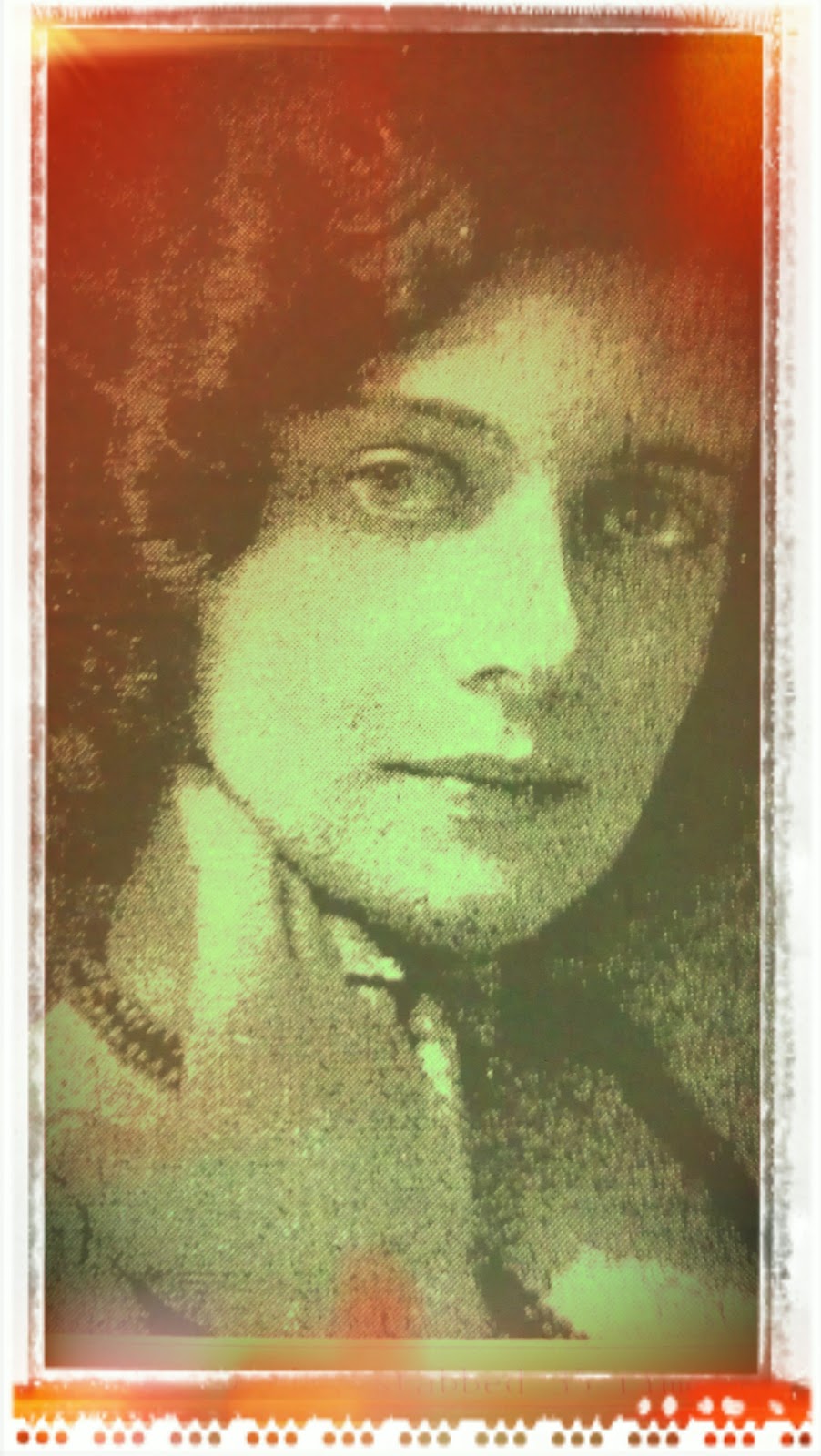
Florence Linda Platt was born in London in 1905. She disappeared in 1934 and in 1944 was officially identified as the murder victim who, until that point, had been known only as the Pyjama Girl. 

By all accounts, Linda was very independent, particularly for the times. She operated a sweets and tobacco business as a young woman and then, after a failed romance, moved across the world, first to New Zealand, then to Australia.

Linda trained as a hairdresser and worked on cruise ships for a while. When she settled in Sydney she got a job working as a cinema usherette for Hoyts. She met Antonio Agostini in Sydney and married him in 1930. 

There has been some speculation that Linda had a drinking problem and was an aggressive drunk—but this perhaps was just a tactic by Tony Agostini’s lawyer to make Tony seem more sympathetic during the trial. There is no real evidence that Linda had a drinking problem.

We do know that Linda had an independent streak and her family remembers her as hot tempered. She was also very sweet – she writes in her letters or nursing a sick pet canary back to health, and of Tony buying her a Pomeranian pup that had run away. Linda herself disappeared just days after her dog. 

Much has been made of Linda’s physical performance and the similarity with the pyjama girl. Linda has peculiar ears, freckles, brown eyes, a long nose, nice teeth and light brown hair. She was probably rather glamorous and well put together. The striking difference is that Linda had brown eyes but the bogy of the girl found in the culvert had blue eyes. Linda’s dental records at first did not line up with the dental work of the Pyjama Girl, although later, were found to be a match by the third dental examiner appointed to the case. The first two were not asked to testify at the final inquest.

Linda was artistic, which seems to be a family trait. She sold her first artwork at the age of 13, according to her niece Jeane, who is mentioned in one of the letters. Linda’s great-great-niece Rhiannon, now in her 20s, also sold her first artwork when she was just 13. 

Linda never had children, but still has relatives living in England and New Zealand. Some of them consider the case closed, and accept that Linda was the pyjama girl, murdered by her husband. Others wonder if this was so, but doubt that with the passage of time, they will ever find closure. 

Tuesday, October 8, 2013

Playwriting odyssey


Half my lifetime ago (almost) I was in Year 10 at what was then called Wodonga High School and it was time for work experience. For some reason, I hadn’t organised what I wanted to do. This was out of character for me, because I was a disgusting overachiever. I was the kid with the waving hand who always knew the answer and had a ridiculous amount of extra-curricular activities—public speaking and debating, working on the school magazine, SRC, playing in three bands, doing speech and drama lessons outside school, performing in school plays and learning how to operate lighting, and writing in my spare time. Aside from my lack of interest in PE and my preference for writing poetry in my maths class—which eventually led to me being excused from maths lest I damage the bell curve—I was a good student and usually well organised. But here was something where I didn’t have the answer.

Work experience came around and I had no idea what to do. Some of my friends were doing practical things, like working at Target or McDonalds in the hope that it would lead to an after-school job. Others were doing glamorous things, like doing placements at the local TV station. Others had figured out what they wanted to do after school and were experiencing life as a vet or nurse or teacher.

The fact that I hadn’t yet figured out what I wanted to do with my life was probably behind my failure to act and find a work experience host in time. So, at the eleventh hour, one of my teachers put in a call to HotHouse Theatre. I was interested in acting, and had vague thoughts that if that didn’t work out, my ‘back-up career’ would be as a writer. I sometimes think I must have been equal parts arrogant and ignorant. And yet, for most of my grown-up life, I have made my living as a writer. And while playwriting takes priority, I still perform a bit too.

I was aware that HotHouse existed, if only because it shared office space with the Fruit Fly Circus, which friends of mine trained at. HotHouse management at the time was reluctant to take me on, because there had been an influx of work experience students so there were none of the usual type of work experience tasks left. But they agreed.

As it turns out, I was a terrible work experience student. I kept accidentally hanging up on people when I tried to transfer calls, and I was too shy to spruik the programs well at the matinee show I worked.

But then, on the third day, I was put in the theatre for the day. It was bump out time for the show that had just finished, Andreas Litras’ one-man show Odyssey.


Andreas Litras applying white face paint in his Odyssey. Sorry I did a crap job selling your programs Andreas.
I got to explore the fascinating backstage area of the Butter Factory Theatre and Andreas made conversation with me and showed how he had kitted out his prop suitcase—with white greasepaint that he applied mid show. I remember asking him how he put on the makeup without a mirror and he joked and said ‘with little success’. 

My supervisor that day was Rob. He’s still working tech at HotHouse, including for The Pyjama Girl. He doesn’t remember me from back then, but when I was on work experience, he tricked me into vacuuming and sweeping all of the theatre, and then tutored me in the invaluable craft of ‘wrapping leads’.

I loved it. I was already a believer in the magic of theatre, and now I felt I was entering a secret world that gave me a glimpse into a hidden world.

Little did I know that, 10 years later, I would finally discover what I wanted to do with my life—to inhabit that world and create theatre. 


Having The Pyjama Girl come to life on that very same stage I once swept so enthusiastically is therefore pretty special. 

Me, circa 1999. 

It has taken me a long time to figure out I want to be a playwright (when I grow up). Unlike my teenaged self, I don’t think I’ve got all the answers, and I’m glad I’ve had to take a journey to find this one.

Saturday, September 21, 2013

A grave pilgrimage - part 2


Visiting the Pyjama Girl’s grave at Preston Cemetery in Melbourne was a very different experience to visiting Antonio Agostini’s grave in Cagliari, Sardinia.

I had just arrived back in Australia, flying from Venice to Dubai and then Melbourne. A dear friend of mine, Petra, had volunteered to pick me up, and we met at Southern Cross station and then began driving to the cemetery. It was before peak hour and we were going against the flow of early morning traffic so we got to the cemetery much earlier than we expected, and stopped at a nearby McDonalds to kill time and have breakfast, and catch up. We talked theatre and music and life and I raved about Italy and talked more about how the Pyjama Girl play was developing.

We went to the cemetery, and I, with the slight tremors of sleep deprivation settling in, wondered if I would be nervous, and, realising I wasn’t, wondered if I should be.

But the experience was easy, the landscape was familiar, and with Petra at my side, there was a lightness to the experience. There were even a few laughs.

There was an information office clearly marked at the entrance to the cemetery, but we consulted the map closest to the car park first. I had a grave number this time, but the map didn’t give an indication of grave numbering. But just then, two groundskeepers, in fluoro vests walked past and said hello, and we enquired about the grave number. The men said we could get better directions at the office, but the men reckoned they knew which section was likely and explained how the numbering system worked.

‘Give us a yell if you get lost,’ they said, as we thanked them and wandered away.

‘Oh, but however will we find you,’ Petra joked, referring to the high-visibility vests.

Laughs all round, and quite relaxed, we wandered up a gentle hill towards the section the men had pointed to. We lost the numbers briefly, and I thought maybe the grave would be in the pauper’s area, which was missing many of the helpful bricks numbering each grave—and, more challengingly, missing headstones. The Pyjama Girl (buried as Linda Agostini) was recorded as being in an unmarked grave.

We decided to start working our way towards to information office, but then found the numbers again, and soon, the numbers were leading us to the row the Pyjama Girl is buried in. We walked, calling out grave numbers to each other.

‘She must be just down here,’ I said.

And she was. I saw the number before I saw the grave, but registered that it wasn’t, in fact, unmarked as I had expected. A simple white cross, made by hand, and not quite symmetrical with the name Florence L. Agostini handwritten in lipstick red. We stood quietly at the grave for a moment.


It was a warm day in Melbourne. The third day of spring. The sun was starting to creep up. I smelled gumtrees. Heard magpies calling.

There were even some artificial flowers left at the grave, and they hadn’t been discoloured by weather so it was hard to tell how old they were.

Either way, someone cared. Someone remembered. Maybe more than several someones. We spent a few quiet minutes at the grave. 

I had an impulse to leave something at the grave. A token of respect. It seemed unfair that I had left a badge at Agostini’s tomb in Cagliari, but nothing here.

I wished I’d thought to buy flowers on the way. In Cagliari, the cemetery had flower markets out the front. Here, no such convenience (we thought; we later saw there was a florist a block away). 


Hat flower in Venice.

I suddenly remembered the white fabric flower I’d been wearing in my hair. 

I bought it the week before I went to Albury to clip my fringe out of my eyes. I wore the flower in my hair, or pinned to my hat all throughout my time in Italy. It became my signature item at the playwriting retreat. I have photos of myself wearing it in Florence, in Venice, in Sardinia. It’s become imbued with me, with Italy, with this adventure I’ve been having as the play nears the stage.

It’s now nestled on the stones at the Pyjama Girl’s final resting place. 


Then, because Petra was curious, we went into the long brick mausoleum near the car park and it was like going back to Italy. Notices not to light candles or leave fresh flowers (ersatz only, due to occupational health and safety regulations) written first in Italian and then in English. Tombstones adorned with flowers and pendants of saints and photographs of the deceased. Some, still bearing handmade cards or letters from father’s day. An old Nonna, tending to the plaque of a loved one. We were quiet, hushed, as we walked through the hallways of the dead and tried to figure out how the artificial candles worked.

Thinking about it afterwards, I found it curious that my emotional response was so much stronger when I found Tony’s tomb in Sardinia.

In part, I know that’s because of the quest to find it. The journey. The possible failure. The high stakes, knowing I wouldn’t easily have a chance to revisit.

I was in an unknown place, an unfamiliar landscape,

Tony’s tomb was untended, forgotten, unlike the others around it, which were adorned with flowers.

I was relieved to see the Pyjama Girl’s grave was marked and not forgotten, even if it did have the wrong name on it. I think the name on the cross may also have affected the way I responded to it. I wasn’t there to mourn Linda Agostini, and it’s hard to pay your respects to someone when you don’t know their name.

Mostly, though, I think it’s because I knew what to expect when visiting Preston Cemetery.

I’ve travelled the road where the body was found. I’ve smelled the sterile antiseptic in the case where the death mask is kept at the LibraryMuseum. I’ve touched the lead-lined box where the Pyjama Girl spent ten years preserved in a formalin solution.

But still, as I farewelled Petra at Southern Cross station and boarded the train to take me to Albury, it was with a sense of disquiet about my response to the two experiences.

What did my experience say about feminism?

After all, it’s reasonably possible that Agostini did kill his wife. It’s just that she wasn’t the Pyjama Girl.

Yes, he would have been guilty of a crime, but if it hadn’t been the woman who became an icon—the equivalent of the unknown soldier for female murder victims—he wouldn’t have become a household name for all the wrong reasons. So what am I doing sympathising with him?

I think it’s because the storyteller part of me is upset at people getting the story wrong. The way Agostini is remembered is not necessarily true to his life. The man – now commonly documented as a waiter – also had highly ambitious, intellectual career as a journalist who started an Italian language paper in Australia.

While I was in Italy I saw other tombs. Machiavelli, Michelangelo, members of Florence’s Medici family, popes, martyrs. It wasn’t deliberate tombstone tourism, but history and memorials were everywhere I went.

So I’ve been thinking about how we memorialise people.

And I realise a play is a way to do that. I think that’s partly what the Pyjama Girl is all about – what drove me to write about it; that this story is about to pass out of living memory. The actors, aged under 26, had never heard of it, despite growing up in the area. Somewhere, in the few years between their age and mine, the story has faded.
When Petra and I were heading back to the car at the Preston Cemetery, one of the men wearing high-visibility vests waved to us.
‘How’d you go? Did you find what you were looking for?’ he asked.
I think I already had it. I don’t think I needed to go to the grave—to ask permission from this girl, to make sure I am doing the right thing by here—because I think that’s why I wanted to visit. I’m glad I went there all the same.

Wednesday, September 11, 2013

Jet-lagged video blog

I'm sure I meant to post this earlier. Anyway, here's me, talking about a new word I learned while in Italy.

Another post to come soon on my quest to Sardinia to find Antonio Agostini (well, his tomb) and the recent public staged reading of the Pyjama Girl that HotHouse put on as part of the Write Around the Murray festival.

Friday, July 26, 2013

Video blog #2

I know in the last video I left you with a teaser and a promise to talk more about the 'behind the scenes' elements in the script, but more about that next time. Instead, I wanted to give you an idea of what I've been doing in my many hours at the National Library of Australia, reading newspaper articles like this:


'Truth' newspaper, 1943 subtly juxtaposes the similarities between Philomena Morgan (L) and the Pyjama Girl (R). Note: Philomena's photo may have been doctored, and the image of the Pyjama Girl is one of several different artist's impressions.

So, here's a video I prepared earlier. If you like you can pretend it satisfies the 'behind the scenes' promise because you can see what I look like without makeup, good lighting, adequate sleep. (Which to be honest, is what I look like normally). Also, the NLA café sells ginormous soup bowls of coffee, so I might be talking a bit fast...

Thursday, July 18, 2013

A video blog

 
Turns out I'm hopeless at keeping up a blog, so here's a video of me talking about where I'm up to with this project. I've just finished another wonderful creative development with the HotHouse ensemble, and after a research binge, handed in a fresh draft of the script.


While driving back from Albury I had an unfortunate side adventure when my car ran out of petrol because a major service station on the Hume Highway, which shall remain nameless, was already closed at 10 pm. As someone who regularly travels the highway, this was a surprise to me.

As someone who has completely memorised the statement of Antonio Agostini, the man who confessed to murdering the Pyjama Girl, who details how he had taken a tin of petrol with him when he drove the body from Melbourne to Albury because he knew he wouldn't be able to get petrol overnight, the irony wasn't lost on me. Also, because y'know, it's not the 1930s any more. Luckily we have mobile phones, so I was able to phone a friend to rescue me.

Nontheless, I spent some post-midnight hours in my car, on a lonely, pitch black country road (to Binalong, not Howlong, as in the Pyjama Girl case) I decided to use my time sensibly by taking in script revision while I waited for assistance. After I got my car started again I discovered I had been parked on a culvert (a drain under a road).

The Pyjama Girl was found in a culvert on the Howlong Road, and I can now imagine, much more clearly, just how lonely that place must have been and the sheer luck that the body was discovered as soon as it was.

Tuesday, May 29, 2012

Overdue blog part 2: Sydney

Yes, that’s right, another interstate trip.

Following my return from Albury, I’ve spent the last week and a bit gathering more research. I headed along to the National Library of Australia in Canberra, where I spent an afternoon scanning through 1930s editions of Truth newspaper, until I got seasick from the microfilm.

Then to Sydney, where I visited the Home front: wartime Sydney exhibition at the Museum of Sydney to get context on the time in which the pyjama girl case unravelled. I also visited the Museum of Contemporary Art and saw part of Vivid Festival while I was there—all in one whirlwind day.
The main event of the day though, was the Justice and Police Museum, housed in the historic building that was once home to the water police and court. Inside it’s a place of heavy sandstone walls, labyrinthine corridors, and old cells that would be eerie if they weren’t so neatly kept. Inside, you’d hardly know you were just steps away from Circular Quay.

The x-rays of that led to the discovery of a bullet


My reason for visiting was the exhibition dedicated to the Pyjama Girl, which includes her penultimate resting place—the lead lined coffin in which she was preserved for 10 years.
When people hear that she was submerged in a formalin bath, they often imagine something like a bathtub—or else, something in the way of a glass coffin. Even though I knew that wasn’t the case, seeing this receptacle in person gave me goose bumps. In fact, it made me feel incredibly sad. I tried to work up the nerve to touch it—after all, it was just a wooden box—but I couldn’t.

I left the room—an old cell—and wandered through the narrow corridor of the historic building to the next room. When I walked into this one, I saw two men in police uniforms with their backs to me and at first, I thought they stuffed manikins—ghosts on display, along with the photographs that lined the cinderblock rooms.


The lonely second-last resting place

Then one of the police officers shifted his weight, rolled his ankle in circles like someone who had been on his feet too long already that day, and moved across to the next row of photos.
I shuffled around the room too, following them without making eye contact—I was too spooked to look up.
We were all silent, until they began to leave the room, and I heard a radio crackle.
Later, I went back into the room where the Pyjama Girl’s casket was kept. This time, I touched it.

It was a wooden box,  hollowed, empty.

Wednesday, March 14, 2012

I don't have answers but I do have questions


“I never knew her in life. She exists for me through others, in evidence of the ways her death drove them. Working backward, seeking only facts, I reconstructed her as a sad little girl and a whore, at best a could-have-been--a tag that might equally apply to me. I wish I could have granted her an anonymous end, relegated her to a few terse words on a homicide dick’s summary report, carbon to the coroner’s office, more paperwork to take her to potter’s field. The only thing wrong with the wish is that she wouldn’t have wanted it that way. As brutal as the facts were, she would have wanted all of them known.”

So begins James Elroy’s novel “The Black Dahlia”, describing itself as a novel based on Hollywood’s most notorious murder case.

The two cases of course, have some things in common--attractive young women, found dead, brutally battered. It’s interesting to note that the Pyjama Girl murder took place in 1934, well ahead of the 1947 Black Dahlia murder--although this is certainly one thing we wouldn’t want to claim as a first.

It’s no an exaggeration to say that the Pyjama Girl is Albury’s most notorious murder case, if not Australia’s.

But with other cases before and since--mysteries with the same elements of the salacious, the gruesome, the tragic--why has this particular murder mystery endured?

That’s what I’m here to find out.

In 1932, in Ayr in Far North Queensland, a man from the electrical company was checking the meter on a house when he made a gruesome discovery within. Clad only in her nightgown, the body of the beautiful Jean Morris was pooled in the blood resulting from a reported 35 stab wounds. It’s certain that Morris wasn’t her real name, so the intrigue of alternate identities is something this case has in common with the Pyjama Girl mystery.

And there’s another important thing in common--a potential victim. Anna Philomena Morgan was considered a possible match for the dead girl found just outside Albury. 

Much of this was due to the efforts of a Dr Palmer Benbow, who fancied himself a detective. Eventually, much of his evidence was dismissed. 

And Anna Philomena Morgan was crossed off the long list of names as it was believed ‘She was identical with Jean Morris’. This is an idea that since seems to have been dismissed as the ugly duckling photograph of a young Philomena hardly suggested that she could turn into the beautiful Stiletto Jean.

Tonight, I meet with the Albury and District Historical Society, where I'm looking forward to hearing more stories, connections, and contradictions.


Monday, February 20, 2012

Connecting with the community

One of things that interests me about this project is contrast. Contrasts between rich and destitute, between satin pyjama clad city gals and sensible rural ladies in cotton shifts they'd sewn themselves, and most fascinating of all, between headlines and reality.

Albury was a town that became the dumping ground for a notorious murder, the mystery of which caused rifts and for some, damage to their family reputation. At the same time, it was an event about which little was said. Locals didn't want to take ownership of it, to be associated with a brutal murder.

Instead, it would rather be remembered for another significant local event--which also took place in 1934. The Uiver

*Not the Albury Uiver... This is a Dutch postcard advertising "Ovomaltine". Like eating crusts will grow hair on your chest, this malted milk drink must make you man enough to fly a plane.


Picture it... An iconic Dutch aircraft, flailing about in electrical storm, in need of an emergency landing.

The hero? The local community, who, responding to a radio broadcast, jumped in their cars and drove to the race course. Lining up their vehicles with the headlights on (in a way vaguely reminiscent of James Dean's chicky run in Rebel Without A Cause), they created a makeshift airstrip... and a safe landing for the Uiver.

You can listen to John Walker's excellent radio play thanks to the local ABC here.

The point though? Is that when communities come together, they can do wonderful things. I've started poking around, finding people to meet and speak to for this project. The people I've contacted have been receptive and helpful. The historical society even went to the trouble of deleting a section of their newsletter so they could include my call for stories!

I've also got another exciting lead to follow, but in the meantime, I'm sleuthing away, connecting links, and looking forward to beginning conversations.

Friday, February 10, 2012

The girl murdered in her pyjamas

Albury, New South Wales. 1934.

A murdered woman, wearing silk pyjamas, is found by a road near Albury, and her body is preserved and displayed for 10 years.

She is eventually identified as flapper Linda Agostini, and her husband is arrested. But his prior connections with police officials and other inconsistent evidence raises the possibility that he was a simply a scapegoat for a crime that remains unsolved.

Then there’s the fact that the body’s eyes were a different colour to Linda Agostini’s.

This iconic murder mystery is the subject of a new play I'm working on, thanks to a JUMP mentorship.

Using Verbatim techniques, my focus will be on themes of connections and contradictions, from the enduring effect of the murder on the local community, to the sensational, fictionalised headlines and newsreels. I hope the finished play will interrogate these myths and possible solutions to the mystery, while reflecting the broader Australian and local context of the time.

It's the early stages, but I'll soon be getting out there with a recorder and interviewing people. Let's see what I'll dig up!