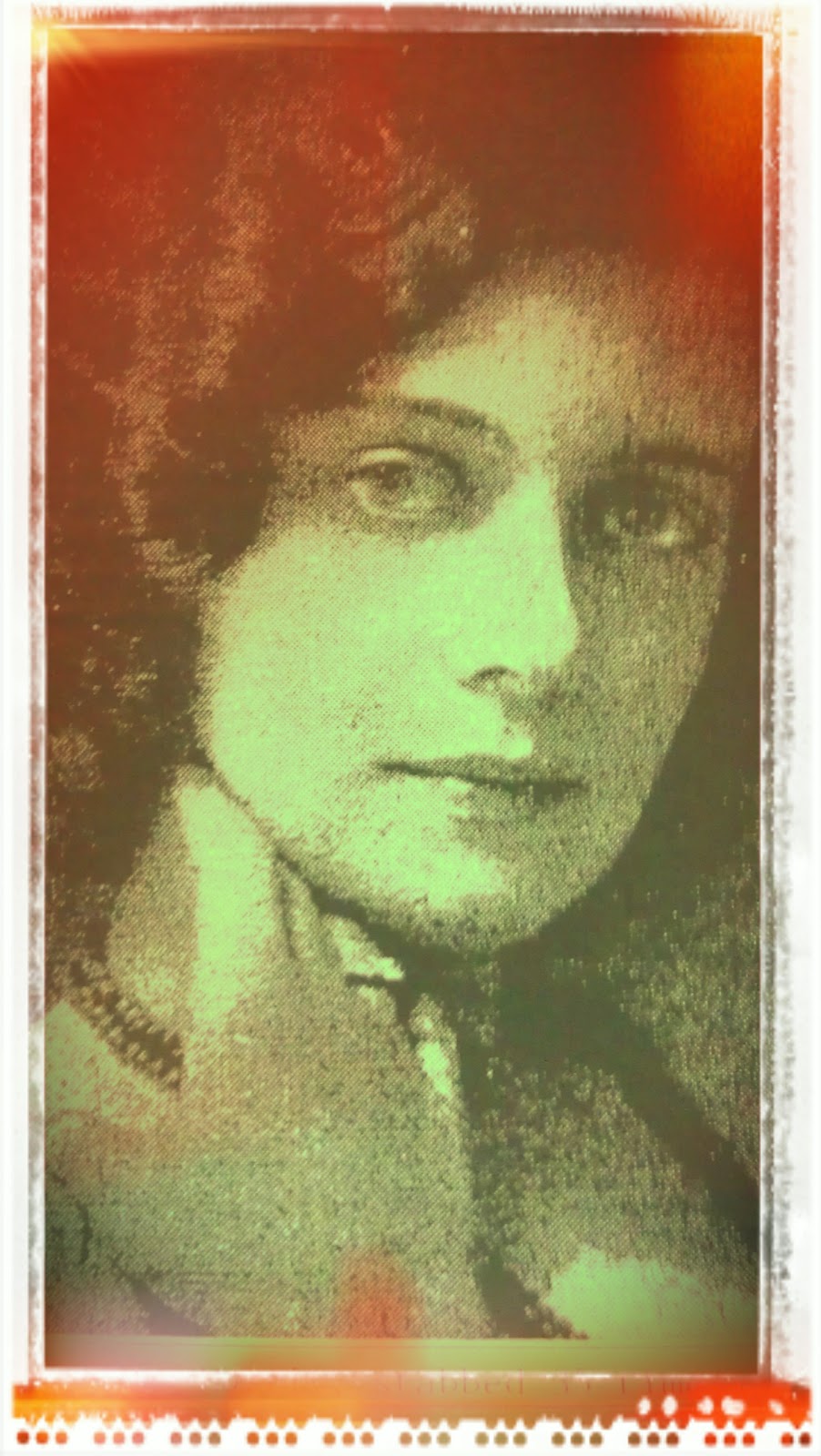
While there are fictional elements in this dramatization of the Pyjama Girl mystery, it is based on true events, facts, and people.
I’ve put together these biographies from a variety of sources, including research by Richard Evans, Bruce Pennay, Alec Morgan, and Robert Coleman, as well as interviews, old newspaper articles and court documents.
Born in Ararat* in western Victoria in 1885, Dr Thomas Alexander Palmer Benbow spent enough of his life in America to have developed an accent. He graduated from Jefferson Medical College in Philadelphia in 1914, and then worked in England, Australia and overseas, including on cruise liners.
He was a rich man and there was some mystery about how he came into money. Caroline Ford, from the Ford car manufacturing family left him money in her will—although before she died she sought legal help to reduce to amount she was to leave to him. It does seem possible that was a conman, or at the very least, a gold digger. He had a persuasive personality, which we can see in his dealings with Commissioner MacKay, Lucy Collins and Jeanette Routledge. His time working on cruise ships would have allowed him to make friends with elderly people, who may have given him money, or agreed to leave him an inheritance.
On returning to Australia, Benbow worked in Potts Point Sydney and took an interest in forensic science. Becoming something of an amateur detective, proposing a solution to the pyjama girl case. For some reason, he impressed MacKay and was given a car, men and war-time petrol rations. Benbow settled on Quins shack as the murder scene, and found Lucy Collins, who provided testimony about having seen a girl beaten. Later, after tracking down Jeanette Routledge, Benbow advanced the theory that the girl was none other than Philomena Morgan. Benbow’s evidence included a broken bedstead that he claimed was the murder weapon (what he said was blood was in fact rust) and photographs in which he showed the similarity in geometry between the face of Philomena Morgan and the Pyjama Girl, but there was little evidentiary value.
Transcripts show an argument between the two in which Mackay more or less accuses Benbow of fabricating evidence to suit his theory and Benbow responds that the detectives aren’t doing enough.
But Benbow would not give up; even in the final trial, when the court found Linda Agostini, and not Philomena Morgan was the victim, he asked to present new evidence—but the judge would not hear him.
*Incidentally, my parents are both from Ararat. But my Grandma checked and there's no relation to Benbow.
Showing posts with label Jean Morris. Show all posts
Monday, October 21, 2013
Thursday, October 17, 2013
Who was Anna Philomena Morgan?
![]() |
| Philomena Morgan (left) and artist's sketch of the pyjama girl. |
Philomena’s father is unknown and she spent time away from her mother while growing up, sometimes living with friends. She went by many names, including Philomena Franki, Anna Morgan, Phillys De Pierre, Ann Manganetti, Philomena Coots, Britz, or Morris. But her mother, apparently, called her Decimah.
Philomena left her mother’s home in 1930. She spent time living in Darlinghurst, but didn’t seem to have an occupation. It’s possible she worked as a prostitute and certainly it seems she was receiving treatment for syphilis. Other witnesses at the trial, friends of hers, said she had married, and was known as a Mrs Callow. Her mother said Philomena was being ‘kept’ by a married man.
Photographs and descriptions of Philomena suggested strong similarities with the appearance of the Pyjama Girl. When Philomena’s mother, Jeanette Routledge applied in the small claims court for her missing daughter’s estate (jewellery and the like) the possibility that Philomena Morgan was the Pyjama Girl became public.
It was here that Dr Benbow got involved, and he adapted his theory about the pyjama girl, slotting Philomena in as the victim.
Ultimately, Dr Benbow’s theories were discounted. This does not mean that Philomena conclusively proved not to be the Pyjama Girl. It is possible that it was her.
To provide further reason for striking Philomena from the list, the NSW police advanced the suggestion that Philomena could not be the Pyjama Girl, found dead in 1934, because she matched the description of another woman found murdered in sleeping attire—Jean Morris in 1932.
Jean Morris doesn't appear in the play--but she is nonetheless a fascinating side note.
Jean Morris, probably not her real name, was murdered in 1932 in Ayr, Queensland.
She was found by the electricity man, who had come to read the meter. Jean was found clad in only a nightdress and had been stabbed multiple times (some reports said 32 times).
Jean Morris was known locally as ‘Stiletto Jean’ because of the small knife she carried. She worked as a prostitute for Vincenzo D’Agostino and Francisco Femio, who were rumoured to run the Northern Queensland ‘Black Hand’—the secret Italian crime organisation, also known as the Camorra.
Her real name was unknown. It was said that she was the daughter of an Italian opera singer. The case was never solved and her murderer never found.
Jean Morris was a beautiful woman and her description was similar to that of Philomena Morgan—dark hair, attractive features and large blue eyes. Because she was found dead in 1932 and because Philomena disappeared from her mother’s home around 1930 and the police advanced a theory that Philomena Morgan was, in fact, the murdered woman known as Jean Morris. And this of course meant that Philomena could not be the Pyjama Girl.
However, this theory was based on very tenuous evidence in which an acquaintance of Philomena’s remembered Philomena talking about her intentions to ‘travel up north and work for the cane cutters’. Other friends of Philomena Morgan gave testimony in the Pyjama Girl investigation that they had seen her as late as 1933—after the time Jean Morris was murdered.
![]() |
| Jean Morris |
She was found by the electricity man, who had come to read the meter. Jean was found clad in only a nightdress and had been stabbed multiple times (some reports said 32 times).
Jean Morris was known locally as ‘Stiletto Jean’ because of the small knife she carried. She worked as a prostitute for Vincenzo D’Agostino and Francisco Femio, who were rumoured to run the Northern Queensland ‘Black Hand’—the secret Italian crime organisation, also known as the Camorra.
Her real name was unknown. It was said that she was the daughter of an Italian opera singer. The case was never solved and her murderer never found.
Jean Morris was a beautiful woman and her description was similar to that of Philomena Morgan—dark hair, attractive features and large blue eyes. Because she was found dead in 1932 and because Philomena disappeared from her mother’s home around 1930 and the police advanced a theory that Philomena Morgan was, in fact, the murdered woman known as Jean Morris. And this of course meant that Philomena could not be the Pyjama Girl.
However, this theory was based on very tenuous evidence in which an acquaintance of Philomena’s remembered Philomena talking about her intentions to ‘travel up north and work for the cane cutters’. Other friends of Philomena Morgan gave testimony in the Pyjama Girl investigation that they had seen her as late as 1933—after the time Jean Morris was murdered.
Wednesday, March 14, 2012
I don't have answers but I do have questions
“I never knew her in life. She exists for me through others, in evidence of the ways her death drove them. Working backward, seeking only facts, I reconstructed her as a sad little girl and a whore, at best a could-have-been--a tag that might equally apply to me. I wish I could have granted her an anonymous end, relegated her to a few terse words on a homicide dick’s summary report, carbon to the coroner’s office, more paperwork to take her to potter’s field. The only thing wrong with the wish is that she wouldn’t have wanted it that way. As brutal as the facts were, she would have wanted all of them known.”
So begins James Elroy’s novel “The Black Dahlia”, describing itself as a novel based on Hollywood’s most notorious murder case.
The two cases of course, have some things in common--attractive young women, found dead, brutally battered. It’s interesting to note that the Pyjama Girl murder took place in 1934, well ahead of the 1947 Black Dahlia murder--although this is certainly one thing we wouldn’t want to claim as a first.
It’s no an exaggeration to say that the Pyjama Girl is Albury’s most notorious murder case, if not Australia’s.
But with other cases before and since--mysteries with the same elements of the salacious, the gruesome, the tragic--why has this particular murder mystery endured?
That’s what I’m here to find out.
In 1932, in Ayr in Far North Queensland, a man from the electrical company was checking the meter on a house when he made a gruesome discovery within. Clad only in her nightgown, the body of the beautiful Jean Morris was pooled in the blood resulting from a reported 35 stab wounds. It’s certain that Morris wasn’t her real name, so the intrigue of alternate identities is something this case has in common with the Pyjama Girl mystery.
And there’s another important thing in common--a potential victim. Anna Philomena Morgan was considered a possible match for the dead girl found just outside Albury.
Much of this was due to the efforts of a Dr Palmer Benbow, who fancied himself a detective. Eventually, much of his evidence was dismissed.
And Anna Philomena Morgan was crossed off the long list of names as it was believed ‘She was identical with Jean Morris’. This is an idea that since seems to have been dismissed as the ugly duckling photograph of a young Philomena hardly suggested that she could turn into the beautiful Stiletto Jean.
Tonight, I meet with the Albury and District Historical Society, where I'm looking forward to hearing more stories, connections, and contradictions.
Much of this was due to the efforts of a Dr Palmer Benbow, who fancied himself a detective. Eventually, much of his evidence was dismissed.
And Anna Philomena Morgan was crossed off the long list of names as it was believed ‘She was identical with Jean Morris’. This is an idea that since seems to have been dismissed as the ugly duckling photograph of a young Philomena hardly suggested that she could turn into the beautiful Stiletto Jean.
Tonight, I meet with the Albury and District Historical Society, where I'm looking forward to hearing more stories, connections, and contradictions.
Subscribe to:
Posts (Atom)