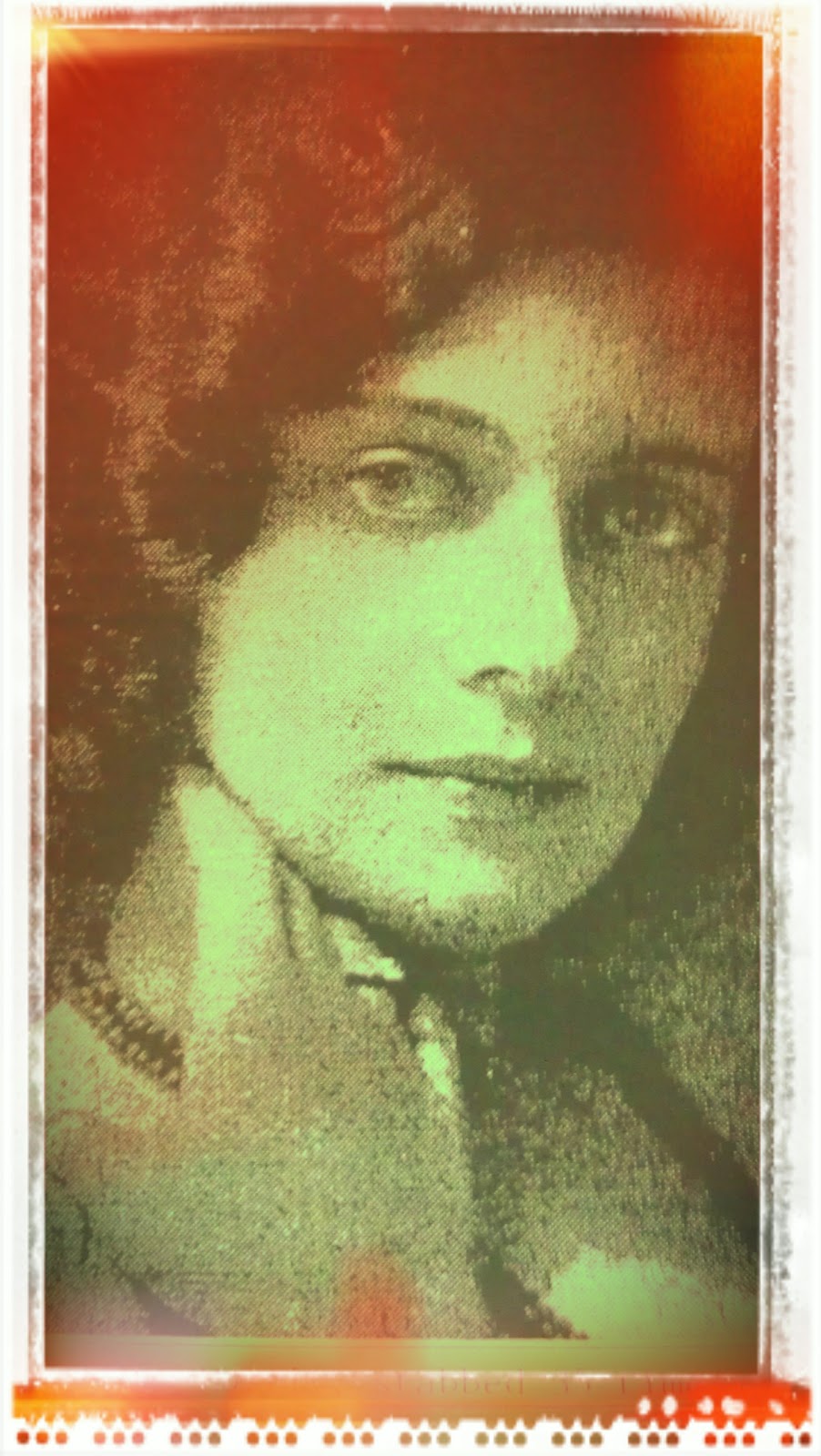
Tuesday, May 29, 2012

Overdue blog part 2: Sydney

Yes, that’s right, another interstate trip.

Following my return from Albury, I’ve spent the last week and a bit gathering more research. I headed along to the National Library of Australia in Canberra, where I spent an afternoon scanning through 1930s editions of Truth newspaper, until I got seasick from the microfilm.

Then to Sydney, where I visited the Home front: wartime Sydney exhibition at the Museum of Sydney to get context on the time in which the pyjama girl case unravelled. I also visited the Museum of Contemporary Art and saw part of Vivid Festival while I was there—all in one whirlwind day.
The main event of the day though, was the Justice and Police Museum, housed in the historic building that was once home to the water police and court. Inside it’s a place of heavy sandstone walls, labyrinthine corridors, and old cells that would be eerie if they weren’t so neatly kept. Inside, you’d hardly know you were just steps away from Circular Quay.

The x-rays of that led to the discovery of a bullet


My reason for visiting was the exhibition dedicated to the Pyjama Girl, which includes her penultimate resting place—the lead lined coffin in which she was preserved for 10 years.
When people hear that she was submerged in a formalin bath, they often imagine something like a bathtub—or else, something in the way of a glass coffin. Even though I knew that wasn’t the case, seeing this receptacle in person gave me goose bumps. In fact, it made me feel incredibly sad. I tried to work up the nerve to touch it—after all, it was just a wooden box—but I couldn’t.

I left the room—an old cell—and wandered through the narrow corridor of the historic building to the next room. When I walked into this one, I saw two men in police uniforms with their backs to me and at first, I thought they stuffed manikins—ghosts on display, along with the photographs that lined the cinderblock rooms.


The lonely second-last resting place

Then one of the police officers shifted his weight, rolled his ankle in circles like someone who had been on his feet too long already that day, and moved across to the next row of photos.
I shuffled around the room too, following them without making eye contact—I was too spooked to look up.
We were all silent, until they began to leave the room, and I heard a radio crackle.
Later, I went back into the room where the Pyjama Girl’s casket was kept. This time, I touched it.

It was a wooden box,  hollowed, empty.

Monday, May 28, 2012

Overdue blog part 1: Albury

Apologies for the radio silence, but I’ve been busy working on the Pyjama Girl Project—as evidenced by the lack of procrastination-by-blogging.

Since my last update, I’ve been gathering research, ideas, and the story of the Pyjama Girl. This has included time trawling through Trove, library visits and a couple of trips down to Albury.
My first major milestone for my Jump project was to send excerpts of interview transcripts to my mentor, Colette. When I got Colette’s feedback, I realised I’d made a facepalm-worthy rookie mistake. You see, I’d already conducted so much research that I knew the story inside out. And when people were speaking to me, they assumed I had this level of knowledge. This meant I didn’t manage to capture anyone talking about the origins of the story—the dead girl found by the side of the road.

And at its heart, that’s what the story is all about.
So I resumed my hunt for talent. Without being sure what to expect, I tracked down Richard Evans, historian, criminologist and author of the Pyjama Girl Mystery–an exhaustively researched and definitive examination of the evidence, and beautifully written to boot. I think I ran around my office squealing when I heard back from Richard, who happily agreed to be interviewed, and even very generously offered to dig through his archives for some research I’d been chasing.

A week after interviewing Richard, who is the living expert on the case, I then had a go at pretending to be the second-foremost authority, when I gave a talk at the invitation of the Albury LibraryMuseum as part of Law Week 2012. The topic was Law and Justice: Our Murky Past. A local solicitor, Kym, spoke about the legal perspective of the case.
Afterwards, we had a photo shoot in front of the Pyjama Girl’s death mask, which is on display in the LibraryMuseum.


The death mask--and unfortunate reflective glare.
Believe it or not, this was my third time looking down the barrel of a camera next to that mask—but this time was very different—the glass case was unlocked and one side removed, and Kym and I were asked to move closer to the mask by the photographer. Obediently, we moved our heads into the case, occupying the same space as the mask (no copy, but the actual plaster cast that was once pressed against the dead girl’s battered face). It smelled sterile, like a hospital. That was the strangest thing. The cast looked sadder and smaller without the pane of glass separating us and bouncing my own reflection back at me. The photographer asked us to smile. It was hard to manage.   

Thursday, April 5, 2012

My mother told me...

One of the reasons why I wanted to tell this story is because it's not just a single story. There are many stories, myths, and conspiracy theories that resulted from this murder mystery. Of the people I've spoken to so far, every single story has been different, many contradictory, and yet told to me with such conviction that each time I speak to someone, I am convinced I am hearing the real truth of the case.

Well, mostly. 

Until next time, here's a mini-myth to keep you entertained, taken directly from the transcripts.

..."When she was identified, I said to my mother ‘what’s all this about the pyjama girl?’ And mum said ‘oh poor lady came from Melbourne with a suitcase of her clothes and it was all stolen and she had to go back to Melbourne in her pyjamas.’"

Now, as people ask me about the play I'm working on, their next question is often 'Who was the Pyjama Girl.' As that in itself is a far too complicated answer, I'm tempted to begin borrowing the story about the suitcase!

Thursday, March 22, 2012

On the road

Howdy. Just a quick post from Nashville, while I have good internet access. The radio silence on the blog is due to me being away on what may now seem like an unfortunately timed holiday--immediately after completing my first round of interviews for the Pyjama Girl Project. But don't worry, the project is not on pause. While I may not be at work, I'm still working.

Over the last week, I spent some time in Chicago, where I went on a mobster tour--obviously. Purely for research, of course. In fact, there were some interesting tidbits to come out of the tour, including questions around identity (which is a key theme running through the Pyjama Girl case) and the Black Hand. The contrast between the 20s, 30s, 40s in Australia and the US is quite interesting, and the similarities, particularly the two I noted above, even more so.

While I'm away, my Magical Typewriter Monkey is transcribing the interviews/conversations I've already recorded. Most of these took place following a meeting of the Albury and District Historical Society. I was thrilled by the enthusiasm and generosity of the people who came to meet with me. Also with the offers to lend books, photocopies and other sources of information for my research. I'm looking forward to meeting with more people.

I was also blown away by interest in this project. It just goes to show that it is still relevant today. Just weeks ago, a drop of blood from the Wanda Beach murder site raised fresh hopes that the 1965 case--the murder of two schoolgirls--might finally be solved. A few people have asked me about the possibility of exhumation and forensic testing, like DNA to confirm the identity of the woman buried in the grave marked Linda Agostini. As a playwright, it's not a question I can answer, but it is one I plan to ask of those more qualified.

Already, I've had some media coverage of the project, which all started with ABC Goulburn Murray breakfast announcer Gaye Pattison--no media release necessary. I haven't yet had a chance to thank her, but I imagine she must have acted as my publicist, fielding calls and forwarding my contact details to other local media outlets.

Coincidentally enough, Howard from the Border Mail called me when I was sitting in the Albury LibraryMuseum looking at 1934 issues of the paper on microfiche. I'd been lamenting the fact that the Border Mail isn't available on Trove (the National Library's digitised newspaper collection) and Howard explained that it was due to a fire, which destroyed all the archives several years ago. You can read the article here.

Prime News also did a story. In it, you'll see me standing in front of the Pyjama Girl's actual death mask. You can watch the video here.


Thanks to newspaper syndication, the story was even picked up in Brisbane. The good folks at 4bc have posted the interview online.

Wednesday, March 14, 2012

I don't have answers but I do have questions


“I never knew her in life. She exists for me through others, in evidence of the ways her death drove them. Working backward, seeking only facts, I reconstructed her as a sad little girl and a whore, at best a could-have-been--a tag that might equally apply to me. I wish I could have granted her an anonymous end, relegated her to a few terse words on a homicide dick’s summary report, carbon to the coroner’s office, more paperwork to take her to potter’s field. The only thing wrong with the wish is that she wouldn’t have wanted it that way. As brutal as the facts were, she would have wanted all of them known.”

So begins James Elroy’s novel “The Black Dahlia”, describing itself as a novel based on Hollywood’s most notorious murder case.

The two cases of course, have some things in common--attractive young women, found dead, brutally battered. It’s interesting to note that the Pyjama Girl murder took place in 1934, well ahead of the 1947 Black Dahlia murder--although this is certainly one thing we wouldn’t want to claim as a first.

It’s no an exaggeration to say that the Pyjama Girl is Albury’s most notorious murder case, if not Australia’s.

But with other cases before and since--mysteries with the same elements of the salacious, the gruesome, the tragic--why has this particular murder mystery endured?

That’s what I’m here to find out.

In 1932, in Ayr in Far North Queensland, a man from the electrical company was checking the meter on a house when he made a gruesome discovery within. Clad only in her nightgown, the body of the beautiful Jean Morris was pooled in the blood resulting from a reported 35 stab wounds. It’s certain that Morris wasn’t her real name, so the intrigue of alternate identities is something this case has in common with the Pyjama Girl mystery.

And there’s another important thing in common--a potential victim. Anna Philomena Morgan was considered a possible match for the dead girl found just outside Albury. 

Much of this was due to the efforts of a Dr Palmer Benbow, who fancied himself a detective. Eventually, much of his evidence was dismissed. 

And Anna Philomena Morgan was crossed off the long list of names as it was believed ‘She was identical with Jean Morris’. This is an idea that since seems to have been dismissed as the ugly duckling photograph of a young Philomena hardly suggested that she could turn into the beautiful Stiletto Jean.

Tonight, I meet with the Albury and District Historical Society, where I'm looking forward to hearing more stories, connections, and contradictions.


Monday, February 20, 2012

Connecting with the community

One of things that interests me about this project is contrast. Contrasts between rich and destitute, between satin pyjama clad city gals and sensible rural ladies in cotton shifts they'd sewn themselves, and most fascinating of all, between headlines and reality.

Albury was a town that became the dumping ground for a notorious murder, the mystery of which caused rifts and for some, damage to their family reputation. At the same time, it was an event about which little was said. Locals didn't want to take ownership of it, to be associated with a brutal murder.

Instead, it would rather be remembered for another significant local event--which also took place in 1934. The Uiver

*Not the Albury Uiver... This is a Dutch postcard advertising "Ovomaltine". Like eating crusts will grow hair on your chest, this malted milk drink must make you man enough to fly a plane.


Picture it... An iconic Dutch aircraft, flailing about in electrical storm, in need of an emergency landing.

The hero? The local community, who, responding to a radio broadcast, jumped in their cars and drove to the race course. Lining up their vehicles with the headlights on (in a way vaguely reminiscent of James Dean's chicky run in Rebel Without A Cause), they created a makeshift airstrip... and a safe landing for the Uiver.

You can listen to John Walker's excellent radio play thanks to the local ABC here.

The point though? Is that when communities come together, they can do wonderful things. I've started poking around, finding people to meet and speak to for this project. The people I've contacted have been receptive and helpful. The historical society even went to the trouble of deleting a section of their newsletter so they could include my call for stories!

I've also got another exciting lead to follow, but in the meantime, I'm sleuthing away, connecting links, and looking forward to beginning conversations.

Monday, February 13, 2012

Jumping in with both feet

Soon, I'll write something more coherent about this play, but now I'm focused on phase one -- mad research.

I'm trying to look into as many different angles as possible, before I head out and start conducting the interviews that will make up the text of the play. Thematically, I'm interested in connections and contradictions. There are plenty of both so far. But some of the connections and coincidences I've found in the last few days have been so exciting I told my wise mentor Colette that I'm tempted to create my very own serial killer-esque photo wall and connect common threads with a spider web of red wool.

It's, yes, a story of murder and mystery--but also of communities in turmoil, poverty, fascism, mobsters, planes, trains and automobiles. Beyond that it's a story of broken women: flappers, hookers, drunks and runaways.

This was the era of Tilly Devine and Kate Leigh, but Darlinghurst was a very long way from Albury NSW, although Big Bill Mackay is a key character here too, managing to apparently solve the Pyjama Girl murder, all while enjoying a free lunch from his favourite little Italian place. If you believe the statement of confession, all it took was for the hulking Irishman to ask the diminutive Italian waiter -- 'Why so glum Tony?' And after 10 years, Antonio Agostino uncorked as easily as a bottle of Lambrusco.

But was that really the end of the story? And as for the beginnings... well, that's where I am right now.