Monday, October 21, 2013

Who was Dr Palmer Benbow?

While there are fictional elements in this dramatization of the Pyjama Girl mystery, it is based on true events, facts, and people.

I’ve put together these biographies from a variety of sources, including research by Richard Evans, Bruce Pennay, Alec Morgan, and Robert Coleman, as well as interviews, old newspaper articles and court documents.


Born in Ararat* in western Victoria in 1885, Dr Thomas Alexander Palmer Benbow spent enough of his life in America to have developed an accent. He graduated from Jefferson Medical College in Philadelphia in 1914, and then worked in England, Australia and overseas, including on cruise liners.

He was a rich man and there was some mystery about how he came into money. Caroline Ford, from the Ford car manufacturing family left him money in her will—although before she died she sought legal help to reduce to amount she was to leave to him. It does seem possible that was a conman, or at the very least, a gold digger. He had a persuasive personality, which we can see in his dealings with Commissioner MacKay, Lucy Collins and Jeanette Routledge. His time working on cruise ships would have allowed him to make friends with elderly people, who may have given him money, or agreed to leave him an inheritance. 

On returning to Australia, Benbow worked in Potts Point Sydney and took an interest in forensic science. Becoming something of an amateur detective, proposing a solution to the pyjama girl case. For some reason, he impressed MacKay and was given a car, men and war-time petrol rations. Benbow settled on Quins shack as the murder scene, and found Lucy Collins, who provided testimony about having seen a girl beaten. Later, after tracking down Jeanette Routledge, Benbow advanced the theory that the girl was none other than Philomena Morgan. Benbow’s evidence included a broken bedstead that he claimed was the murder weapon (what he said was blood was in fact rust) and photographs in which he showed the similarity in geometry between the face of Philomena Morgan and the Pyjama Girl, but there was little evidentiary value.

Transcripts show an argument between the two in which Mackay more or less accuses Benbow of fabricating evidence to suit his theory and Benbow responds that the detectives aren’t doing enough. 

But Benbow would not give up; even in the final trial, when the court found Linda Agostini, and not Philomena Morgan was the victim, he asked to present new evidence—but the judge would not hear him.

*Incidentally, my parents are both from Ararat. But my Grandma checked and there's no relation to Benbow.

Who was Jeannette Routledge?

While there are fictional elements in this dramatization of the Pyjama Girl mystery, it is based on true events, facts, and people.

I’ve put together these biographies from a variety of sources, including research by Richard Evans, Bruce Pennay, Alec Morgan, and Robert Coleman, as well as interviews, old newspaper articles and court documents.

Jeanette Routledge was the mother of Philomena Morgan. Philomena was born when she was just 19, and the father was unknown. 

Jeanette Routledge was married a number of times, and lived under many names. In 1919 she married Audra de la Pierre and then married bigamously to Benjamin Nagel in 1923. When she was caught, she was already living with Ronald Routledge. Jeanette’s own mother had been married multiple times and lived under many names, and so too did Philomena.

While staying in Canberra with a friend, Jeanette was supposed to have screamed in in a drunken hysteric that she had killed her daughter. However, this is hearsay only. It does seem she was a disaffected mother. But she did say that the reason for her split from her daughter was that Philomena being kept as the mistress by a married man, and she didn’t think it right. This is ironic, for a woman who had committed the act of bigamy herself.

Jeanette admitted in court to having previously committed perjury, including lying about her daughter’s age in a carnal knowledge case against a lodger, Robert Seeney. She had also given an incorrect description of Philomena to the police when first approached in 1934. In 1937, she viewed the body of the Pyjama Girl at the Sydney University and was adamant it was not her daughter. But in 1944 she changed her mind at the Pyjama Girl inquest.

This may well have been as a result of the influence on her by Dr Benbow. We'll meet him next.

Thursday, October 17, 2013

Who was Anna Philomena Morgan?

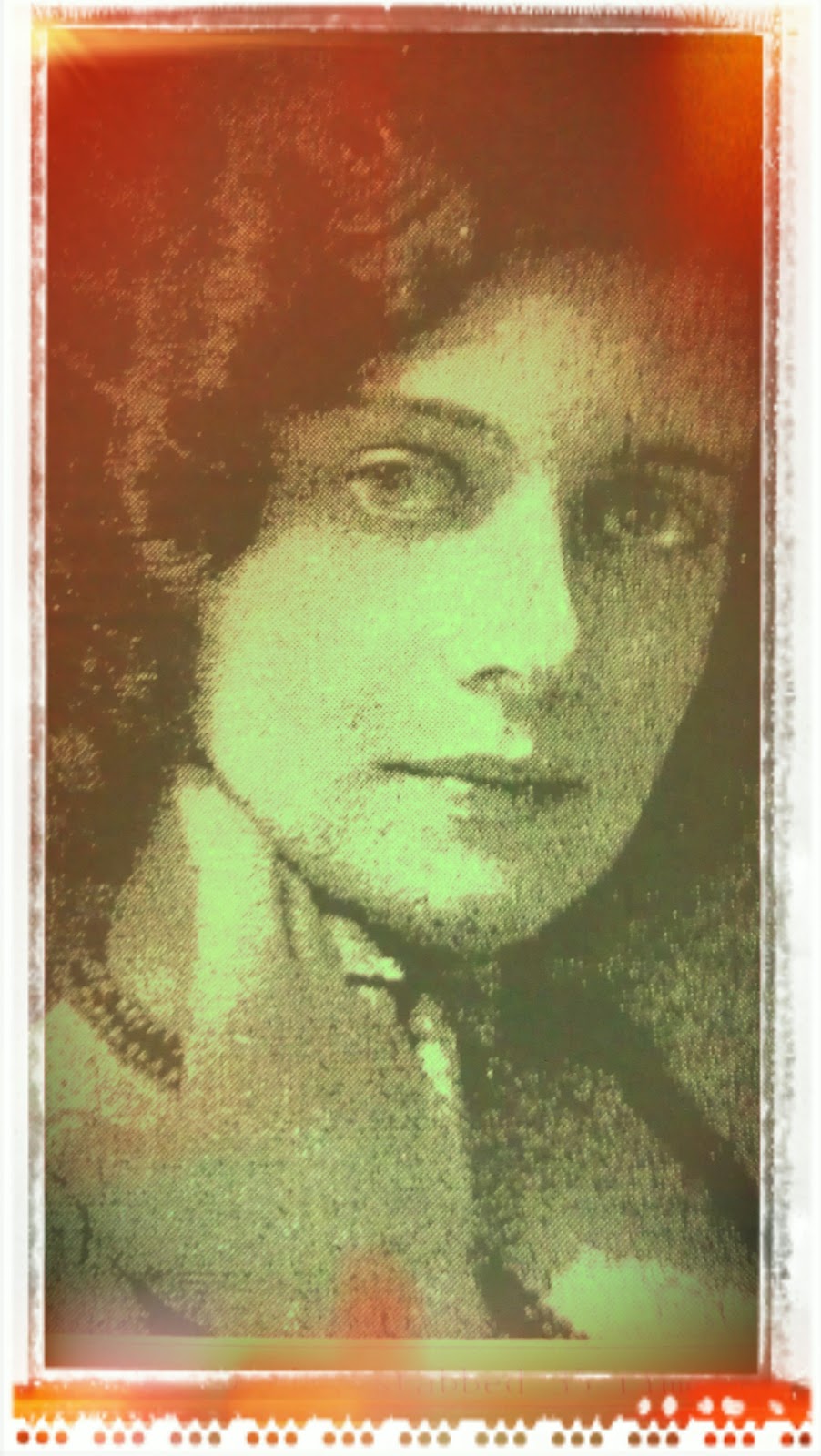
Philomena Morgan (left) and artist's sketch of the pyjama girl.
Anna Philomena Morgan was born in 1911, although her mother had lied about her age in Philomena’s age in a court case in which they accused a lodger at their home of having committed carnal knowledge—that is, relations with a girl under the age of consent. The lodger, Robert Seeney was charged, but it later came to light that Philomena was over the age of consent.

Philomena’s father is unknown and she spent time away from her mother while growing up, sometimes living with friends. She went by many names, including Philomena Franki, Anna Morgan, Phillys De Pierre, Ann Manganetti, Philomena Coots, Britz, or Morris. But her mother, apparently, called her Decimah.

Philomena left her mother’s home in 1930. She spent time living in Darlinghurst, but didn’t seem to have an occupation. It’s possible she worked as a prostitute and certainly it seems she was receiving treatment for syphilis. Other witnesses at the trial, friends of hers, said she had married, and was known as a Mrs Callow. Her mother said Philomena was being ‘kept’ by a married man.

Photographs and descriptions of Philomena suggested strong similarities with the appearance of the Pyjama Girl. When Philomena’s mother, Jeanette Routledge applied in the small claims court for her missing daughter’s estate (jewellery and the like) the possibility that Philomena Morgan was the Pyjama Girl became public.

It was here that Dr Benbow got involved, and he adapted his theory about the pyjama girl, slotting Philomena in as the victim.

Ultimately, Dr Benbow’s theories were discounted. This does not mean that Philomena conclusively proved not to be the Pyjama Girl. It is possible that it was her.

To provide further reason for striking Philomena from the list, the NSW police advanced the suggestion that Philomena could not be the Pyjama Girl, found dead in 1934, because she matched the description of another woman found murdered in sleeping attire—Jean Morris in 1932.

Jean Morris doesn't appear in the play--but she is nonetheless a fascinating side note.

Jean Morris
Jean Morris, probably not her real name, was murdered in 1932 in Ayr, Queensland. 

She was found by the electricity man, who had come to read the meter. Jean was found clad in only a nightdress and had been stabbed multiple times (some reports said 32 times). 

Jean Morris was known locally as ‘Stiletto Jean’ because of the small knife she carried. She worked as a prostitute for Vincenzo D’Agostino and Francisco Femio, who were rumoured to run the Northern Queensland ‘Black Hand’—the secret Italian crime organisation, also known as the Camorra.

Her real name was unknown. It was said that she was the daughter of an Italian opera singer. The case was never solved and her murderer never found. 

Jean Morris was a beautiful woman and her description was similar to that of Philomena Morgan—dark hair, attractive features and large blue eyes. Because she was found dead in 1932 and because Philomena disappeared from her mother’s home around 1930 and the police advanced a theory that Philomena Morgan was, in fact, the murdered woman known as Jean Morris. And this of course meant that Philomena could not be the Pyjama Girl. 

However, this theory was based on very tenuous evidence in which an acquaintance of Philomena’s remembered Philomena talking about her intentions to ‘travel up north and work for the cane cutters’. Other friends of Philomena Morgan gave testimony in the Pyjama Girl investigation that they had seen her as late as 1933—after the time Jean Morris was murdered.

Who was Antonio Agostini?

Antonio Agostini's tomb in Sardinia
While there are fictional elements in this dramatization of the Pyjama Girl mystery, it is based on true events, facts, and people.

I’ve put together these biographies from a variety of sources, including research by Richard Evans, Bruce Pennay, Alec Morgan, and Robert Coleman, as well as interviews, old newspaper articles and court documents.

Photos of Tony can be viewed here. Here's one of him on the beach with his wife Linda.

Antonio Agostini was born in Altivole, Northern Italy in 1903. He moved to Australia in 1927 and met Linda, who was to become his wife, the following year. He is remembered as a waiter, as that was his occupation when he confessed to murdering his wife, but in reality he was far more ambitious than that.

Tony worked as a journalist and started an Italian language paper in Australia. He was a well-regarded member of the Italian community.

He was also a loyal member of the Italian Fascist party and because of this, in June 1940, he was one of 172 Italians arrested in accordance with the detailed plan prepared by NSW Police Commissioner Mackay. Tony was interred at camps in regional NSW for 3 years and 8 months.

Tony had a girlfriend who he wrote to, but it seems they never saw each other again after he got out of the camps, because his freedom was brief. He got a job working at the exclusive Romano’s restaurant after his release, where he was previously worked as a cloakroom attendant. There, he came into contact again with a regular client—MacKay. The way the story goes, MacKay noticed that Agostini didn’t seem the cheerful man he had met some 10 years earlier, and on asking Agostini why he seemed changed, Agostini confessed to killing his wife.

Agostini was charged with manslaughter, not murder, which at the time, carried a hanging penalty. He served 3 years and 8 months in prison. He was apparently a model prisoner, described as a quiet, gentle man, and worked in the Pentridge Prison Library. On his release, he was smuggled out in the middle of the night and put on a cruise liner to extradite him out of the country on the orders of the immigration minister, Arthur Calwell.

Agostini first returned to Northern Italy, where he had grown up, before settling in Cagliari, the capital city of the island of Sardinia. Perhaps this appealed to Agostini, where it was unlikely he would have acquaintances who knew about his life in Australia. He opened two clothing stores and married a widow Giuseppina Gasoni. He died in 1969.

Wednesday, October 16, 2013

Who was Linda Agostini?

While there are fictional elements in this dramatization of the Pyjama Girl mystery, it is based on true events, facts, and people.

I’ve put together these biographies from a variety of sources, including research by Richard Evans, Bruce Pennay, Alec Morgan, and Robert Coleman, as well as interviews, old newspaper articles and court documents.
Linda Platt, 1930. State Records of NSW.

Florence Linda Platt was born in London in 1905. She disappeared in 1934 and in 1944 was officially identified as the murder victim who, until that point, had been known only as the Pyjama Girl. 

By all accounts, Linda was very independent, particularly for the times. She operated a sweets and tobacco business as a young woman and then, after a failed romance, moved across the world, first to New Zealand, then to Australia.

Linda trained as a hairdresser and worked on cruise ships for a while. When she settled in Sydney she got a job working as a cinema usherette for Hoyts. She met Antonio Agostini in Sydney and married him in 1930. 

There has been some speculation that Linda had a drinking problem and was an aggressive drunk—but this perhaps was just a tactic by Tony Agostini’s lawyer to make Tony seem more sympathetic during the trial. There is no real evidence that Linda had a drinking problem.

We do know that Linda had an independent streak and her family remembers her as hot tempered. She was also very sweet – she writes in her letters or nursing a sick pet canary back to health, and of Tony buying her a Pomeranian pup that had run away. Linda herself disappeared just days after her dog. 

Much has been made of Linda’s physical performance and the similarity with the pyjama girl. Linda has peculiar ears, freckles, brown eyes, a long nose, nice teeth and light brown hair. She was probably rather glamorous and well put together. The striking difference is that Linda had brown eyes but the bogy of the girl found in the culvert had blue eyes. Linda’s dental records at first did not line up with the dental work of the Pyjama Girl, although later, were found to be a match by the third dental examiner appointed to the case. The first two were not asked to testify at the final inquest.

Linda was artistic, which seems to be a family trait. She sold her first artwork at the age of 13, according to her niece Jeane, who is mentioned in one of the letters. Linda’s great-great-niece Rhiannon, now in her 20s, also sold her first artwork when she was just 13. 

Linda never had children, but still has relatives living in England and New Zealand. Some of them consider the case closed, and accept that Linda was the pyjama girl, murdered by her husband. Others wonder if this was so, but doubt that with the passage of time, they will ever find closure. 

Tuesday, October 8, 2013

Playwriting odyssey


Half my lifetime ago (almost) I was in Year 10 at what was then called Wodonga High School and it was time for work experience. For some reason, I hadn’t organised what I wanted to do. This was out of character for me, because I was a disgusting overachiever. I was the kid with the waving hand who always knew the answer and had a ridiculous amount of extra-curricular activities—public speaking and debating, working on the school magazine, SRC, playing in three bands, doing speech and drama lessons outside school, performing in school plays and learning how to operate lighting, and writing in my spare time. Aside from my lack of interest in PE and my preference for writing poetry in my maths class—which eventually led to me being excused from maths lest I damage the bell curve—I was a good student and usually well organised. But here was something where I didn’t have the answer.

Work experience came around and I had no idea what to do. Some of my friends were doing practical things, like working at Target or McDonalds in the hope that it would lead to an after-school job. Others were doing glamorous things, like doing placements at the local TV station. Others had figured out what they wanted to do after school and were experiencing life as a vet or nurse or teacher.

The fact that I hadn’t yet figured out what I wanted to do with my life was probably behind my failure to act and find a work experience host in time. So, at the eleventh hour, one of my teachers put in a call to HotHouse Theatre. I was interested in acting, and had vague thoughts that if that didn’t work out, my ‘back-up career’ would be as a writer. I sometimes think I must have been equal parts arrogant and ignorant. And yet, for most of my grown-up life, I have made my living as a writer. And while playwriting takes priority, I still perform a bit too.

I was aware that HotHouse existed, if only because it shared office space with the Fruit Fly Circus, which friends of mine trained at. HotHouse management at the time was reluctant to take me on, because there had been an influx of work experience students so there were none of the usual type of work experience tasks left. But they agreed.

As it turns out, I was a terrible work experience student. I kept accidentally hanging up on people when I tried to transfer calls, and I was too shy to spruik the programs well at the matinee show I worked.

But then, on the third day, I was put in the theatre for the day. It was bump out time for the show that had just finished, Andreas Litras’ one-man show Odyssey.


Andreas Litras applying white face paint in his Odyssey. Sorry I did a crap job selling your programs Andreas.
I got to explore the fascinating backstage area of the Butter Factory Theatre and Andreas made conversation with me and showed how he had kitted out his prop suitcase—with white greasepaint that he applied mid show. I remember asking him how he put on the makeup without a mirror and he joked and said ‘with little success’. 

My supervisor that day was Rob. He’s still working tech at HotHouse, including for The Pyjama Girl. He doesn’t remember me from back then, but when I was on work experience, he tricked me into vacuuming and sweeping all of the theatre, and then tutored me in the invaluable craft of ‘wrapping leads’.

I loved it. I was already a believer in the magic of theatre, and now I felt I was entering a secret world that gave me a glimpse into a hidden world.

Little did I know that, 10 years later, I would finally discover what I wanted to do with my life—to inhabit that world and create theatre. 


Having The Pyjama Girl come to life on that very same stage I once swept so enthusiastically is therefore pretty special. 

Me, circa 1999. 

It has taken me a long time to figure out I want to be a playwright (when I grow up). Unlike my teenaged self, I don’t think I’ve got all the answers, and I’m glad I’ve had to take a journey to find this one.

Saturday, September 28, 2013

The play-in-progress preview reading

After I visited the Pyjama Girl at the cemetery in Melbourne, I jumped on a train and napped all the way to Albury. Then, it was straight to rehearsals in preparation for the staged reading that was happening two days later. Being in the theatre, and seeing the immense amount of work that the director, Travis, and cast had done while I’d been away in Italy was really exciting, not in the least because I’d made some script revisions before I left Australia and this was my first opportunity to see the changes. 

On Thursday 5 September HotHouse presented a public staged reading as part of the Write Around the Murray festival. This was followed by a Q and A session. I, of course, was still jet-lagged, and arrived at the theatre an hour and a half before the actor’s call, because I got the time wrong. Continuing my habit of sleeping in things that are not beds: planes, trains, my Mum’s Winnebago, I had a kip on a couch in the dressing rooms, which as it turns out, is an excellent place for napping, especially when the delightful production manager turned off the lights and put on the gentle blue backstage lights instead. 

Everything moved quickly after that and before I knew it, audience members were appearing in the foyer. My Mum and sister came along, as did my Dad, who by amazing coincidence was in Albury that week. That was an exciting moment for me personally, as he has never seen a play I’ve written because he doesn’t live near me. (And also, he’s not really a theatre type. When I was 18 and told him I was going to university to study a Bachelor of Arts he said, ‘Why Emma? You can’t draw.’) 

The reading went very well—except for a technical hiccup. 

While the first reading held in December last year had been quite static, with actors sitting or standing in a row and reading from a script, this time, movement was included, and even live music. Travis read a few stage directions as needed, for example, when scenes hadn’t yet been fully choreographed, or set pieces (like a magician’s box) weren’t on stage. A few songs were even performed live, and keyboard and drums were used to underscore parts of the performance. 

The keyboard, which had worked in rehearsal and when it was tested 10 minutes before the performance, stopped working. The actors, kept going, as good actors should, and the MC even began singing the first song a capella before the technical director called a halt to the show. 

The pianist brought out a second keyboard—but this one didn’t connect to the same power supply. Rapidly, another keyboard was brought out (I think it might have been the first one coming back again) and there was some amusing slapstick as the two keyboards were swapped around) and then finally, a third, much smaller keyboard came out, which had the audience in hysterics. A lady sitting behind me whispered to her friend ‘Oh, I think this is part of the show.’

Finally the keyboard was connected, and technical director Rob took a bow to uproarious laughter and applause.

(As we all know, techs usually spent their time sitting in confined spaces in the dark, so I think Rob enjoyed his moment on stage).

The MC made a few jokes as laughter subsided and the show resumed from the start of the song. 

From there on in, everything went smoothly. Pleasingly, some audience members even joined in singing an old musical hall sing-a-long called ‘Oh Oh Antonio’ (link), which was exactly what I’d hoped for. People laughed in places we hadn’t expected, as well as places we had expected.

After this, I joined Travis, HotHouse Artistic Direct Jon, local historian Bruce, and some cast members on stage for a Q and A facilitated by Jenni Munday. We spoke about the development process and got some good feedback from the audience. We were even able to ask a few of our own questions to see what worked for the audience.

My Dad had asked me, the day before, why I was writing the play, and I said that I had remembered hearing him and Mum talk about it in the car when we were driving along the Howlong road when I was a small child. He said he didn’t think so. 

So either I misremember, or he does, but my Dad doesn’t think he was ever aware of the spot on the road where the Pyjama Girl was found. 

This means that much-used answer I give when people ask me while I’m writing this play may not be true after all. This is strangely fitting in a play that throughout its development, has led me to observe how our memories are so vulnerable to being eroded by mythology.